Embodied, Holistic Faith

A Whole Body Approach to Mental Health

This summer I read a book on exercise and the brain that helped me think about how my own understandings of faith and human flourishing have grown over time.

The book is by the highly acclaimed psychiatrist Dr. John Ratey. It’s his work Spark: The Revolutionary New Science of Exercise and the Brain. Ratey stars his book in an innovative high school physical education program and ends with a rousing call to a more rigorous personal exercise regimen. In between, he reviews a great deal of research on the benefits of exercise for the health and resilience of our brains, including how exercise can help us learn and reduce troubles associated with stress, anxiety, depression, ADHD, addiction, and aging.

Wow, I thought – that’s good news! And the work confirms my experience with the role running plays in my own mental health and managing of ADHD, and with the help it’s been to a number of my friends in recovery. I think running gives me clarity and focus, just as a number of my friends find it helps them be less inclined to return to their drug addictions.

Turns out there’s science backing this up: Ratey affirms the value of therapy and of medication at the center of his field but is clearly wanting to broaden our approach to and understanding of mental health. He writes:

The problem with the strictly biological interpretation of psychology is that we sometimes lose sight of the fact that the mind, brain, and body all influence one another. (119)

We needn’t treat mental health issues as disembodied problems we talk or medicate ourselves out of. We can explore how the use of our bodies is integrated into our mental health as well.

Ratey also quotes his colleague, the psychologist Dr. Robert Pyles, who says:

Exercise saved my life. I think running really put me back with the unitary nature of body and mind – it’s all one thing. We’re not split into pieces. (83)

For Ratey, exercise was part of his way out of a serious lymph system disease that was accompanied by immense stress and significant depression.

We’re all one thing – we’re not split into pieces.

Sometimes we lose sight of the fact that the mind, brain, and body all influence one another. We are whole people, embodied people.

What About a Whole Body Faith?

What Ratey wants for psychology and psychiatry, I want for faith and religion.

For good or for bad, people of faith have had lots to say about matters of the spirit. Wonder about how to go to heaven when you die? Where and when and why to pray? What it means to be a good and righteous person? Religious communities have an answer for you, or at least a direction to point you in.

Those are not the questions my friends and I are asking about our lives. Being saved doesn’t make the kind of intuitive sense to us as being well. Tending to our spirits doesn’t make sense apart from tending to our minds and bodies as well. If faith is going to speak to my life, it’s going to need to speak to my real, authentic self.

I’m serious about my exercise, but I put more into my practice of faith. Not because I’m afraid of hell or particularly motivated to a more moral or spiritual person. No – for me, faith centers, grounds and nourishes my whole, embodied person.

An embodied, holistic faith gives me resources to make peace with my past, so I can live a freer future.

An embodied, holistic faith helps me accept mental and physical disabilities, navigating my own and others’ with more compassion and grace.

An embodied, holistic faith gives me tools to be more connected and at peace with others.

An embodied, holistic faith moves my experience of sexuality beyond shame or pleasure and into intimacy.

An embodied, holistic faith validates my anger in the face of injustice and fuels passion and courage to act.

If we’re all one thing, all whole and embodied people, we need an experience of faith, a practice of spirituality, and an approach to God that validates and nourishes the whole of our bodies and life experience, and equips us to flourish and be agents of the flourishing of our neighbor and our world too.
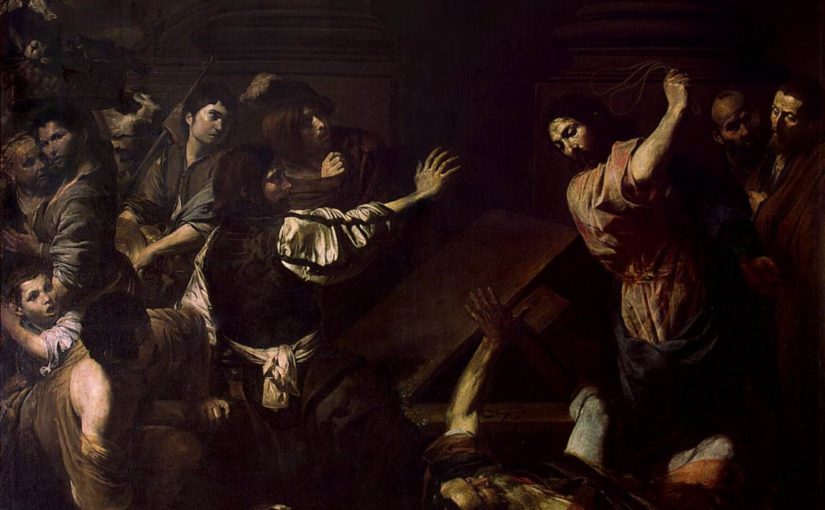
Jesus vs. Empire: A Religion of Creation

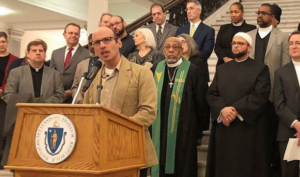
Last month, I had a chance to share with a group of clergy about an aspect of my faith that helps inform contemporary social critique. The session was playfully titled, “A Christian, a Jew, and a Muslim Walk into an Empire.”

I’ve been interested in what faith in a time of empire looks like. Last summer, I preached a short series at Reservoir called Faith in a Time of Empire.

I’ve been thinking in particular about how the life and teaching of Jesus and writings of the early Jesus followers speak when we try to peel off some of the trappings of power that were mixed with them later.

I’ve been reading the work of Wes Howard-Brook, most recently Empire Baptized: How the Church Embraced What Jesus Rejected, 2nd-5th Centuries. It explores this dramatic shift in expression of faith over these four centuries. You start with a faith that emerged in the context of first century Palestinian Judaism, a faith that is deeply subversive to power and wealth, that has a victim of state execution at its center. But by the fifth century, you have a religion that was deeply embedded in the power structures of the Roman Empire, using state violence to stamp out theological enemies and promote its own dominance.

Christianity has a mixed to poor track record with power and Empire. And in this four century shift, Howard-Brook sees the origins of much of the worst power plays that would continue to plague Christian history: anti-Semitism, intolerance to theological diversity, acceptance of state violence to achieve supposedly moral ends, and a heaven-directed faith that promotes abuse of the earth and an anti-sexual, disembodied spirituality.

Howard-Brook’s insight is that it didn’t have to be this way. And that the violent, imperial, disembodied faith that so much of Christianity became isn’t true to its scriptural source materials, or is maybe just true to the worst parts of them.

Wes Howard-Brook’s big idea about the Bible is that the Hebrew scriptures which were included in the Christian Bible capture a thousand year tension between two different expressions of faith. He calls them “the religion of empire” and “the religion of creation.”

The religion of empire looks like any human triangle of power. In this case a powerful god demands service and loyalty. People worship God in urban temples, mediated through a priestly elite. The earth and its resources belong to the powerful, who extract from the land and extract from people to serve the interests of the most powerful, which are called the interests of the collective through propaganda. Enemies and others must conform or suffer violence.

By contrast, in the religion of creation, people worship God wherever God is to be found, which is anywhere on earth, and in human community that gathers in God’s name. The purpose of life is love and praise of God, with joy and gratitude for the abundant gift of life, expressed in right relationships with God, with fellow humans, and with all of creation. All the earth and its resources belong to God, so people are to treat all things as gifts to be treasured. Others are to be included, and enemies to be loved.

Howard-Brook argues that Jesus emphatically took sides in this debate, proclaiming and practicing the reign of God along the lines of this religion of creation.

You can see this throughout what Christians call the New Testament – in its radical ethic of love, in its recasting of “neighbor” to mean all of humanity, in its co-opting of Roman imperial language like “good news”, “Lord and Savior”, peace, and salvation. And throughout the teaching of Jesus as well.

I’ll give you one moment as a highlight, from the gospel of Mark.

Mark 12:13-17 (NRSV)

13 Then they sent to him some Pharisees and some Herodians to trap him in what he said.

Right away I apologize for the anti-semitic tone this introduction has come to have. That’s truly shameful. But the point is that Jesus is entering a first century family debate about the right relationship to the power of the state.

14 And they came and said to him, “Teacher, we know that you are sincere, and show deference to no one; for you do not regard people with partiality, but teach the way of God in accordance with truth. Is it lawful to pay taxes to the emperor, or not? 15 Should we pay them, or should we not?” But knowing their hypocrisy, he said to them, “Why are you putting me to the test? Bring me a denarius and let me see it.” 16 And they brought one. Then he said to them, “Whose head is this, and whose title?” They answered, “The emperor’s.” 17 Jesus said to them, “Give to the emperor the things that are the emperor’s, and to God the things that are God’s.” And they were utterly amazed at him.

Jesus sees this Roman coin with the image of Ceasar on it, and says I have no need of that, no interest in that. Let the Romans have their coins. But let God have what is God’s.

This passage is fascinating to me, because it’s been used so differently. In the United States, for instance, during the Vietnam War, it was used both insist on draft compliance and to empower draft resistance. Because see: read through the religion of empire, this text says you need to give the state what it asks for and what rightfully belongs to it, which is just about everything, your life included. Give God worship and loyalty and religion, and do whatever the powers of the state ask you to do, including fight in their wars.

But read through the religion of creation, this text says something very different. It says to give to the state the stuff that the state has made – the state can have its money and its flags. Participate in the power structures of society at whatever minimum compliance level you need to – fine. But that which bears the image of God –which is all of humanity, each and every person – belongs only to God. Neither the state nor any other human power structure owns your body, your time, or your allegiance.

When I was sharing this with Kathleen Patron, an organizer from Greater Boston Interfaith Organization, it reminded her of a session she teaches in a training on organizing. She teaches that the world as it is is based on power, but the world as it should be is governed by love. Jesus-centered faith as I understand it invites me to push as deeply as possible into the world as it should be, a community of love, and to give only minimum consent to the world as it is, governed through power.

This fuels my social critique: to keep an eye out for the real purpose of corporate and national power, that invites my participation for my own good but is more often than not looking to use people and resources for the good of only a few. And it fuels my social engagement – to ask how people and institutions can use our power to advance systems of right relationships and economies of love.

by Steve Watson

Annual Interfaith Iftar

Join Reservoir and neighbors for our annual interfaith Ramadan dinner.

We’re excited to host our 11th annual Iftar dinner for our Muslim neighbors, celebrating with them as they break fast at the end of the day on Saturday, June 9.

We’ll need volunteers to help set up, bring halal food items, and host during the dinner.

Come, invite your friends, and don’t miss out on one of the most special events in our neighborhood each year. For more information or to sign up, email Michaiah Healy.

A Criminal Justice Win: Governor Baker Signs Bill

Last Friday, April 13, Republican Governor Charlie Baker signed into law major criminal justice reform. Since 2015, our partner Greater Boston Interfaith Organization has fought for paradigm shifting criminal justice reform in Massachusetts with priority on:

  • Reduction in the use of Mandatory Minimums for drug sentencing .
  • Reduction of fines and fees for probation and parole.
  • Changing bail requirements for those unable to pay.
  • Regulation and reduction in the use of Solitary Confinement.

We at Reservoir been really enthusiastic about participating in this work with GBIO. We recognize that in Massachusetts, people of color (particularly Black men) and poor people are disproportionately incarcerated and otherwise hurt by an impediments to justice in our criminal justice system. We hear Jesus’ words in Matthew 25:36 about identifying with those in prison and God’s call for us to pursue justice in our times in Micah 6:8 (and elsewhere), and we have felt compelled by our faith to act for comprehensive criminal justice reform. Here are a few ways we sought to partner with GBIO in their work:

  • Reservoir partner and GBIO core team member Mardi Fuller worked closely on the GBIO criminal justice leadership team with Beverly Williams and Alan Epstein.

  • A few key times last year, Reservoir members and leaders made phone calls to local representatives, hosted an in-district advocacy meeting with State Senator Pat Jehlen, and showed up in person at the State House to voice our support.
  • In November, our Senior Pastor Steve Watson spoke at a rally at the State House, saying that it is core to the good new of Jesus that God doesn’t distinguish between rich and poor in our value, and that our justice system shouldn’t either.

Thanks to the tireless work of GBIO, particularly Beverly and Alan (co-chairs of the GBIO Criminal Justice Team), an imperfect but important law was signed by Governor Baker on Friday that includes: all four of the priorities stated above, decriminalizing youth below 12 years of age, CORI reform, medical release, data collection and reporting for more tranparency, and allowing juvenile records to be expunged after a period of time. It passed unanimously in the Senate and easily passed in the House before being signed by Governor Baker.

There is still work to be done in building a justice world, and advocating for the dignity of all people. But for right now we celebrate with GBIO! Reservoir Community, thank you for your financial giving (part of which goes to support Greater Boston Interfaith Organization), for your time if you volunteered or made calls, and for your prayers for criminal justice reform.


Healthy Faith or Unhealthy Faith? 3 Questions to Ask

I remember a few years ago, there was a study done by the Barna Group that asked young-ish Americans what words they associated with Christian faith. The top word was “anti-homosexual”. But also among the list of top words were “judgmental,” “hypocritical,” and “insensitive”. A substantial amount of people said they had negative views of Christians because of moral failures in leadership.

And I remember thinking — it seems like people are picking up on something unhealthy going on in some Christian groups. It doesn’t seem like folks who don’t go to church associate these church-goers with patience, gentleness, joy, or love. There’s definitely some deeply held beliefs at the root of a movement of people most known for being “judgmental” but whatever it is, it’s not healthy.

In spite of the bad rap from this collective group, it seems like there is such thing as healthy faith that is apparent to observers. There are certainly people we might call “heroes” of faith (Martin Luther King, Jr., Desmond Tutu, Francis of Assisi). Their healthy faith was obvious to those around them. But I think each of us can connect with God in a way that is healthy and rich, and glows for those around us.

In weighing whether faith is unhealthy or healthy, I think these are 3 helpful questions.

  1. Is it humble, or arrogant?

    It seems like every few hundred years, Christian people face an  issue of faith that is a matter of life and death. Church groups split because each side is 100% certain of their rightness on an issue (be it pacifism, infant baptism, different views on the book of Revelation), and are so confident that they are willing to stake community and friendship on it.

    But then, inevitably, after a little bit of time, that issue is no longer a dividing one. People may have changed their minds, decided they don’t care, or still hold a strong opinion as a matter of intellectual interest. But the idea that we wouldn’t be able to be in community over that issue? Unthinkable!

    Is that arrogant or what? To be willing to stake the unity and harmony of a community on one opinion about one thing? To not reserve even the possibility that the other side could be correct, or that (more likely) some mix of the two takes is correct? To not be able to simply say “I don’t know”? Unhealthy faith leaves no room for uncertainty, at the expense of all of us.

    When weighing faith it might be useful to ask: is this stream able to say “I don’t know”? Is it humble, or arrogant?

  2. Is it based on unquestioned authority?

    It’s pretty normal in human groups for leaders to emerge. In healthy circumstances, good transparent leadership can provide efficiency. After all, different folks have different gifts. Some people have the ability to represent various interests, command attention, and make thoughtful decisions. But in unhealthy circumstances, the human tendency to pick leaders can lead to oppressive power structures that demand unquestioning submission.

    This has happened (and continues to happen) in many faith communities. The leadership structures that arise, if they are unhealthy, can end end up demanding faith based on the authority of the leadership. Truth is reasonable and attractive to thoughtful people. When faith leadership makes truth claims, they should offer reasons for teaching those things. If their reason is “because we have declared it”, that deserves a second look. Even the Bible provides reasons for faith.

    Given the tendency for humans to create and abuse authority, it’s probably helpful to weigh faith and ask: what is this based on? Thoughtful reasoning? Or “because I said so” reasoning?

  3. Is it communal?

    Churches usually have a bunch of people in them. When we say healthy faith should be communal, we don’t just mean that there should be a bunch of people involved. There are plenty of unhealthy faith bodies made of multiple people.

    When we say that healthy faith is communal, we mean that faith helps people flourish when it enables connection and learning from others. The impulse to not question anything and totally conform to an arrogant authority is unhealthy, yes. But also unhealthy is the desire to protect ourselves from any influence from other human beings. Both of these things leave no room for authentic connection, friendship, discovery, and growth.

    So a final question you might try asking to weight faith is: is this communal? Does it prevent me from connecting with others and learning from them? Does it cut me off from connection with other people, and all the learning and growth that can come from that?

This is by no means an exhaustive list of signs of unhealthy faith, but instead a loose starting point. We’ve heard many stories of abusive faith traditions, or sometimes experienced that kind of faith tradition ourselves. But from our perspective, good trees bear good fruit! Faith deserves to be picked up occasionally to see if it’s a healthy fruit, or something you’d rather not eat.

Interested in talking these things through with some folks in a similar boat? Our free class, Seek, is something we offer periodically as a space to consider faith in a safe space. It runs on Sunday afternoons for 5 weeks, is discussion based, and includes a free lunch. Get more info here:

Come, Lord Jesus! – Revelation Bible Guide Day 30

Previously in Revelation

7“See, I am coming soon! Blessed is the one who keeps the words of the prophecy of this book.”

Day 29 – 6th Friday

Revelation 22:8-21

8I, John, am the one who heard and saw these things. And when I heard and saw them, I fell down to worship at the feet of the angel who showed them to me; 9but he said to me, “You must not do that! I am a fellow servant with you and your comrades the prophets, and with those who keep the words of this book. Worship God!”

10And he said to me, “Do not seal up the words of the prophecy of this book, for the time is near. 11Let the evildoer still do evil, and the filthy still be filthy, and the righteous still do right, and the holy still be holy.”

12“See, I am coming soon; my reward is with me, to repay according to everyone’s work. 13I am the Alpha and the Omega, the first and the last, the beginning and the end.”

14Blessed are those who wash their robes, so that they will have the right to the tree of life and may enter the city by the gates. 15Outside are the dogs and sorcerers and fornicators and murderers and idolaters, and everyone who loves and practices falsehood.

16“It is I, Jesus, who sent my angel to you with this testimony for the churches. I am the root and the descendant of David, the bright morning star.”

17The Spirit and the bride say, “Come.”
And let everyone who hears say, “Come.”
And let everyone who is thirsty come.
Let anyone who wishes take the water of life as a gift.

18I warn everyone who hears the words of the prophecy of this book: if anyone adds to them, God will add to that person the plagues described in this book; 19if anyone takes away from the words of the book of this prophecy, God will take away that person’s share in the tree of life and in the holy city, which are described in this book.

20The one who testifies to these things says, “Surely I am coming soon.”

Amen. Come, Lord Jesus!

21The grace of the Lord Jesus be with all the saints. Amen.

Points of Interest

    • “I am a fellow servant” – For the second time, John falls to his feet to worship one of God’s messengers. It seems easy for people, while on a search for beauty and goodness and truth to emulate and admire, to stop short of the source of it all and fixate on something else instead. Here the angel urges John – and us – to find our center in God.
    • “Let the evildoer still do evil… and the righteous still do right” – Verses eleven and fifteen are a final assurance of the exclusion of unwilling to change evil and a final urge to separate from the worst ways of our world. A few centuries into church history, Christian churches got less interest in the ongoing pilgrimage of pursuing Jesus and more interested in acquiring power and aligning with the interests and privilege of state power. John would see that as a tragedy. Revelation urges us to be joyfully in our world Jesus is renewing while also removing ourselves from its worst practices.
    • “to repay according to everyone’s work” – It’s a tragedy that one of the upshots of Revelation has been a focus on details we can’t know about the future, hoping that somehow they’re hidden in Revelation, like buried treasure. Revelation’s purpose it to help us prepare, though, not predict.
    • “Blessed are those who wash their robes” – The call for the churches and their members is to resist and so to conquer, but more than that, to take a shower. Connect with Jesus – learn from Jesus, love Jesus and let Jesus love you, be baptized, but none of this as a one-off or a phase. Keep going to Jesus when you fall, keep going to Jesus when you’re afraid, keep going to Jesus when you need forgiveness, keep going to Jesus.
    • “everyone who hears say, ‘Come.’” – The Kingdom of God, the new heaven and earth that Jesus is making, is nothing if not a place of constant invitation. Come. Be filled. Drink life. Be satisfied. You are welcome. Come.
    • “if anyone takes away from the words of the book” – Before copyright, this is the kind of thing you’d drop on the end of your scrolls to make sure the scribes don’t change your words. John’s a little harsh, though, having a hard time lightening up at the end.
    • “Surely I am coming soon” – John quotes Jesus saying this for the second time. What is soon, though? Greek had two words for time – chronos and kairos. Chronos is chronological time we can measure in seconds or years or centuries. Kairos, though, means the right time, or the time of importance, as in “the times” we live in or “the time of our lives.” We don’t know in what year Jesus will return or how. We also never know when we’ll experience Jesus in time, but we know it’s always soon. Walker Percy, in his novel The Second Coming, wrote “Is it possible for people to miss their lives in the same way one misses a plane?” He described this in a person as he wrote, “Not once in his entire life had he allowed himself to come to rest in the quiet center of himself but had forever cast himself forward from some dark past he could not remember to a future which did not exist. Not once had he been present for his life. So his life had passed like a dream.” May we not obsess over chronos, gripped by anxiety, and miss our lives as they pass like dreams. May we live in God’s eternal now, expectant of Jesus’ returning or enjoying the foretaste of Christ with us already.
    • “Come, Lord Jesus” – Before closing with a words of comfort, love, and encouragement, John gives us a core prayer of the life of faith. Come, Jesus, in the future. Come, Jesus, you have been here before. Come, Jesus, in this moment of expectation and hope. In this moment, Jesus, come.

Spiritual Exercise

This week, as Easter approaches, and Revelation climaxes with its vision of a new heaven and a new earth, we’ll look to cultivate hope. Take some time and use your imagination to cultivate hope. Picture yourself walking alongside the river of the water of life, sampling the orchard’s abundant fruit, applying the balm from their leaves to any inner or outer wounds. What does this feel like? Take your time. Now picture yourself face to face with God, who is full of light. What do you experience? What do you do or say? What does God have to say to you? What expression is on God’s face?

A Direction for Prayer

Pray for people and groups you are aware of who are most wounded, most oppressed or outcast or hurt. Ask Jesus to grow the orchard of fruit and healing in their lives. Ask Jesus to flow toward them the river of life that begins in God’s self. Pray for God’s presence and healing for them.

The Bible Guide

This blog post is part of a Lenten journey through the book of Revelation. Every year during the season of Lent, we take a focused look at a portion of Scripture as part of our communal spiritual practice. This year, we are exploring what it means to be Children of God in a Fractured World, with Revelation as our lens. On Sundays, we’re exploring this with our sermons; on weekdays, we’re doing so with our bible guide. The bible guide series starts here.

River of the Water of Life – Revelation Bible Guide Day 29

Previously in Revelation

27But nothing unclean will enter it, nor anyone who practices abomination or falsehood, but only those who are written in the Lamb’s book of life.

Day 29 – 6th Thursday

Revelation 22:1-7

Then the angel showed me the river of the water of life, bright as crystal, flowing from the throne of God and of the Lamb 2through the middle of the street of the city. On either side of the river is the tree of life with its twelve kinds of fruit, producing its fruit each month; and the leaves of the tree are for the healing of the nations. 3Nothing accursed will be found there any more. But the throne of God and of the Lamb will be in it, and his servants will worship him; 4they will see his face, and his name will be on their foreheads. 5And there will be no more night; they need no light of lamp or sun, for the Lord God will be their light, and they will reign forever and ever.

6And he said to me, “These words are trustworthy and true, for the Lord, the God of the spirits of the prophets, has sent his angel to show his servants what must soon take place.”

7“See, I am coming soon! Blessed is the one who keeps the words of the prophecy of this book.”

Points of Interest

    • “the river of the water of life” – It turns out that the spring in this city becomes a whole river that is born in the very person of God. Jews long had a hopeful vision of good and beautiful things being born in their largest city of Jerusalem, symbolized by a river flowing out from Jerusalem. This hope was something of a literal impossibility for this dry, elevated location. Now, with God living in the great city that is the whole new heaven and earth, the dream comes true. All that is inside of God flows to all of us.
    • “the tree of life” – This is evocative of the garden of Eden as well as several other moments in the Old Testament. Here, though, there are twelve different fruits and its’ found on both sides of the river. So it’s not so much a tree that God has planted as a whole orchard. I’ve watched a friend of mine plant and tend to a small orchard, meant to nourish its owners with delightful fruit. It is such a gift, and one that takes such immense planning and work and care. All that is the case here, but the produce isn’t just apples or peaches but abundant, many-varied fruit, and medicinal leaves that heal us all. So beautiful.
    • “his servants will worship” – The word for servants is literally slaves. Scholars estimate that around one third of the population of the Roman empire were slaves, so all of John’s first audience were either slaves or slave-owners or knew one of the two. The word is used here but for the opposite of its reality. The slaves have a couple of slave-like qualities still – they are marked by God on their foreheads, a sign of belonging but of ownership as well; and they worship God. But they also are welcome at the throne and the reign with God forever, so they are co-rulers, not slaves at all. I think this indicates a radical and liberating shift in the human experience.
    • “they will see his face” – The new heaven and earth experience is less that of a worker or slave and more of a trusting child or intimate lover. Metaphors of children of God and bride of Christ are used to indicate the trust and openness and immediacy of seeing God face to face.
    • “These words are trustworthy and true” – As John starts to wrap up, he rephrases many of his opening statements, including an assurance of his complex letter’s authenticity and reliability.

Spiritual Exercise

This week, as Easter approaches, and Revelation climaxes with its vision of a new heaven and a new earth, we’ll look to cultivate hope. Take some time and use your imagination to cultivate hope. Picture yourself walking alongside the river of the water of life, sampling the orchard’s abundant fruit, applying the balm from their leaves to any inner or outer wounds. What does this feel like? Take your time. Now picture yourself face to face with God, who is full of light. What do you experience? What do you do or say? What does God have to say to you? What expression is on God’s face?

A Direction for Prayer

Pray for people and groups you are aware of who are most wounded, most oppressed or outcast or hurt. Ask Jesus to grow the orchard of fruit and healing in their lives. Ask Jesus to flow toward them the river of life that begins in God’s self. Pray for God’s presence and healing for them.

The Bible Guide

This blog post is part of a Lenten journey through the book of Revelation. Every year during the season of Lent, we take a focused look at a portion of Scripture as part of our communal spiritual practice. This year, we are exploring what it means to be Children of God in a Fractured World, with Revelation as our lens. On Sundays, we’re exploring this with our sermons; on weekdays, we’re doing so with our bible guide. The bible guide series starts here.

The Temple is the Lamb – Revelation Bible Guide Day 28

Previously in Revelation

8But as for the cowardly, the faithless, the polluted, the murderers, the fornicators, the sorcerers, the idolaters, and all liars, their place will be in the lake that burns with fire and sulfur, which is the second death.”

Day 28 – 6th Wednesday

Revelation 21:9-27

9Then one of the seven angels who had the seven bowls full of the seven last plagues came and said to me, “Come, I will show you the bride, the wife of the Lamb.” 10And in the spirit he carried me away to a great, high mountain and showed me the holy city Jerusalem coming down out of heaven from God. 11It has the glory of God and a radiance like a very rare jewel, like jasper, clear as crystal. 12It has a great, high wall with twelve gates, and at the gates twelve angels, and on the gates are inscribed the names of the twelve tribes of the Israelites; 13on the east three gates, on the north three gates, on the south three gates, and on the west three gates. 14And the wall of the city has twelve foundations, and on them are the twelve names of the twelve apostles of the Lamb.

15The angel who talked to me had a measuring rod of gold to measure the city and its gates and walls. 16The city lies foursquare, its length the same as its width; and he measured the city with his rod, fifteen hundred miles; its length and width and height are equal. 17He also measured its wall, one hundred forty-four cubits by human measurement, which the angel was using. 18The wall is built of jasper, while the city is pure gold, clear as glass. 19The foundations of the wall of the city are adorned with every jewel; the first was jasper, the second sapphire, the third agate, the fourth emerald, 20the fifth onyx, the sixth carnelian, the seventh chrysolite, the eighth beryl, the ninth topaz, the tenth chrysoprase, the eleventh jacinth, the twelfth amethyst. 21And the twelve gates are twelve pearls, each of the gates is a single pearl, and the street of the city is pure gold, transparent as glass.

22I saw no temple in the city, for its temple is the Lord God the Almighty and the Lamb. 23And the city has no need of sun or moon to shine on it, for the glory of God is its light, and its lamp is the Lamb. 24The nations will walk by its light, and the kings of the earth will bring their glory into it. 25Its gates will never be shut by day—and there will be no night there. 26People will bring into it the glory and the honor of the nations. 27But nothing unclean will enter it, nor anyone who practices abomination or falsehood, but only those who are written in the Lamb’s book of life.

Points of Interest

    • “one of the seven angels” – So far the angels have been pretty grim messengers, taking John – and us – on a tour through the very worst of the earth’s past, present, and future. After showing us all that we have been or could at our worst become, now the angels excitedly reveal what God is making us into.
    • “the holy city of Jerusalem” – John continues with the mixed metaphor of the bride and the city, but starts to put more focus on the new Jerusalem. I’ll quote Peterson again on this. “We enter heaven not by escaping what we don’t like, but by the sanctification of the place in which God has placed us. There is not so much as a hint of escapism in St. John’s heaven. This is not a long (eternal) weekend away from the responsibilities of employment and citizenship, but the intensification and healing of them. Heaven is formed out of dirty streets and murderous alleys, adulterous bedrooms and corrupt courts, hypocritical synagogues and commercialized churches, thieving tax-collectors and traitorous disciples: a city, but not a holy city.” (Reversed Thunder, 174) The Bible’s story begins in a garden – an otherworldly paradise; but it ends with a garden city, the perfection of our current existence.
    • “twelve tribes of the Israelites” – Everything in the city comes in sets of 12, in honor of Israel’s founding twelve tribes, and Jesus’ first twelve messengers, who were mainly his twelve closest students at first. Some of these are known to history, some barely at all, and the ones who are known are not necessarily admirable and heroic. God can work with the heroic and the tragic, the exceptional and the mundane, to make something strong and beautiful.
    • “fifteen hundred miles” – This is no ordinary-sized city. Cubes were considered a perfect shape in the first century, thus its dimensions. The Roman Empire also stretched for roughly fifteen hundred miles from West to East, so this city is approximately as large as John’s known world.
    • “each of the gates is a single pearl” – In case you were wondering where the phrase “pearly gates” came from, now you know. They are part of John’s jewel bedecked city, which isn’t meant to come off as gaudy or materialistic, but symbolic of beauty and care and elegance. Architecture is just one of the arts and vocations put to use in the perfect work of God in the new heaven and new earth.
    • “I saw no temple” – The Bible’s narrative begins without a temple, as the whole earth was fit for God to live in. It also ends without a temple. The whole cubic city itself resembles the heart of a temple, and God’s presence – again found everywhere – is throughout.
    • “the kinds of the earth will bring their glory… people will bring into it the glory … of the nations.” The best of God’s future includes the best of our past and present as well. The best of human culture and achievement will be welcome, without any of its downsides.
    • “Its gates will never be shut… there will be no night” – These are two ways of saying the same thing. Cities had gates to shut each night and in times of threat, to keep out strangers and enemies. Jesus’ renewal of all things means the removal of all that is dangerous as well. This again is why evil is excluded, to create the conditions for safety and peace and complete flourishing.

Spiritual Exercise

This week, as Easter approaches, and Revelation climaxes with its vision of a new heaven and a new earth, we’ll look to cultivate hope. What are some human achievements you most love – in food, sport, music, culture, whatever? Consider that even the best of life we know has downsides too. I think, for instance, of a Boston Cream from my favorite donut shop and know that too many of these will make me sick and eventually kill me. But now consider a future that contains all the best elements of life – the glory and honor of the nations – but cleansed of all their problems. Tell God about the holy city you hope God is preparing – or write about it, or draw a picture. Ask God to show you how God’s future for us all is even better than that.

A Direction for Prayer

Pray for some of the largest companies or industries you can think of in your city or region. Ask God to grow all that they do that is glorious and honorable and to lead people to renew and purify them of all that is false or harmful or in any way abominable.

The Bible Guide

This blog post is part of a Lenten journey through the book of Revelation. Every year during the season of Lent, we take a focused look at a portion of Scripture as part of our communal spiritual practice. This year, we are exploring what it means to be Children of God in a Fractured World, with Revelation as our lens. On Sundays, we’re exploring this with our sermons; on weekdays, we’re doing so with our bible guide. The bible guide series starts here.

New Heaven, New Earth – Revelation Bible Guide Day 27

Previously in Revelation

This is the second death, the lake of fire; 15and anyone whose name was not found written in the book of life was thrown into the lake of fire.

Day 27 – 6th Tuesday

Revelation 21:1-8

Then I saw a new heaven and a new earth; for the first heaven and the first earth had passed away, and the sea was no more. 2And I saw the holy city, the new Jerusalem, coming down out of heaven from God, prepared as a bride adorned for her husband. 3And I heard a loud voice from the throne saying,

“See, the home of God is among mortals.
He will dwell with them;
they will be his peoples,
and God himself will be with them;
4he will wipe every tear from their eyes.
Death will be no more;
mourning and crying and pain will be no more,
for the first things have passed away.”

5And the one who was seated on the throne said, “See, I am making all things new.” Also he said, “Write this, for these words are trustworthy and true.” 6Then he said to me, “It is done! I am the Alpha and the Omega, the beginning and the end. To the thirsty I will give water as a gift from the spring of the water of life. 7Those who conquer will inherit these things, and I will be their God and they will be my children. 8But as for the cowardly, the faithless, the polluted, the murderers, the fornicators, the sorcerers, the idolaters, and all liars, their place will be in the lake that burns with fire and sulfur, which is the second death.”

Points of Interest

    • “heaven” – Heaven in both 1st century Hebrew and Greek didn’t mean “where you might go after you die.” It meant both the skies – the actual place birds fly and clouds appear – and the “invisible realm of God invading us.” Heaven is “the metaphor that tells us that there is far more here than meets the eye.” So it is both future and present tense. “Calling the word heaven a metaphor does not make it less real; it simply recognizes that it is a reality inaccessible at this point to any of our five senses.” (Peterson, Reversed Thunder, 169)
    • “a new heaven and a new earth” – In ancient cosmology, “heaven and earth” are shorthand for all reality – the earth, the skies, realms visible and invisible. Jesus isn’t replacing material reality with an immaterial heaven, but remaking everywhere and everything in creation.
    • “the sea was no more” – For ancient Jews, the sea represented chaos and turbulence. No sea in Jesus’ new heaven and new earth meant for them peace, order, and harmony – nothing to fear. This is part of the present work Jesus has begun and will complete in the future.
    • “the holy city… prepared as a bride adorned for her husband” – We’ll talk more about the city tomorrow, but for now, we note John’s mixed metaphors. What Jesus is doing amongst people that love Jesus is like building a new city and is also like preparing a bride to marry him.
    • “the home of God… He will dwell with them” – God’s presence is what is most new about this heaven and earth. God’s presence is the source of the comfort, the presence that removes death, and the force that is driving away danger. The noun “home” and the verb “dwell” are the same here, both meaning “tent” or “tabernacle.” Jews, before they built a temple, set up a tent for God to live in, as a symbol that God travelled and lived with them. Jesus is making this symbol real now.
    • “See I am making all things new” – This is parallel to the opening “new heaven and new earth” statement. There are narrow teachings on the good news of Jesus that say it is only about forgiving sins or avoiding punishment. Revelation, as with other places in the New Testament, has a really expansive version of the good news, that Jesus is renewing all things – from work to politics to real estate to ecology to our own emotional and psychological experience of life.
    • “It is done” – As future tense and unaccomplished as this vision sounds to us, God is confident that it is finished. This experience has begun and will not be stopped.
    • “To the thirsty” – Evocative of Isaiah 55’s prophecy and Jesus’ own words about being living water that deeply satisfies, John’s image of a spring of living water evokes refreshment, satisfaction, and delight.
    • “Those who conquer” – This has been the goal since the opening letters to the churches in Chapters 2 and 3, that people and communities not give up on persevering in faith, even in the face of all of life’s challenges and grief. Mama and Papa God is here unseen, and has a great inheritance for us, the children.

Spiritual Exercise

This week, as Easter approaches, and Revelation climaxes with its vision of a new heaven and a new earth, we’ll look to cultivate hope. What have you experienced so far of the new heaven and the new earth? Any ways you’ve experienced comfort or satisfaction or protection from God? However small or large that is, what does it mean to you that there is infinitely more where that came from? Ask God to grow your hope that the best of your experience of God and the best of your experience of life is yet to come.

A Direction for Prayer

Pray for your six, that they will experience more of God’s comfort in sorrow and greater hope that Jesus is making all things new. Ask that Jesus will encourage each of them today in the particular place where they are most tired and discouraged of the reality they see and know.

The Bible Guide

This blog post is part of a Lenten journey through the book of Revelation. Every year during the season of Lent, we take a focused look at a portion of Scripture as part of our communal spiritual practice. This year, we are exploring what it means to be Children of God in a Fractured World, with Revelation as our lens. On Sundays, we’re exploring this with our sermons; on weekdays, we’re doing so with our bible guide. The bible guide series starts here.

The Book of Life – Revelation Bible Guide Day 26

Previously in Revelation

21 And the rest were killed by the sword of the rider on the horse, the sword that came from his mouth; and all the birds were gorged with their flesh.

Day 26 – 6th Monday

Revelation 20:1-15

Then I saw an angel coming down from heaven, holding in his hand the key to the bottomless pit and a great chain. 2He seized the dragon, that ancient serpent, who is the Devil and Satan, and bound him for a thousand years, 3and threw him into the pit, and locked and sealed it over him, so that he would deceive the nations no more, until the thousand years were ended. After that he must be let out for a little while.

4Then I saw thrones, and those seated on them were given authority to judge. I also saw the souls of those who had been beheaded for their testimony to Jesus and for the word of God. They had not worshiped the beast or its image and had not received its mark on their foreheads or their hands. They came to life and reigned with Christ a thousand years. 5(The rest of the dead did not come to life until the thousand years were ended.) This is the first resurrection. 6Blessed and holy are those who share in the first resurrection. Over these the second death has no power, but they will be priests of God and of Christ, and they will reign with him a thousand years.

7When the thousand years are ended, Satan will be released from his prison 8and will come out to deceive the nations at the four corners of the earth, Gog and Magog, in order to gather them for battle; they are as numerous as the sands of the sea. 9They marched up over the breadth of the earth and surrounded the camp of the saints and the beloved city. And fire came down from heaven and consumed them. 10And the devil who had deceived them was thrown into the lake of fire and sulfur, where the beast and the false prophet were, and they will be tormented day and night forever and ever.

11Then I saw a great white throne and the one who sat on it; the earth and the heaven fled from his presence, and no place was found for them. 12And I saw the dead, great and small, standing before the throne, and books were opened. Also another book was opened, the book of life. And the dead were judged according to their works, as recorded in the books. 13And the sea gave up the dead that were in it, Death and Hades gave up the dead that were in them, and all were judged according to what they had done. 14Then Death and Hades were thrown into the lake of fire. This is the second death, the lake of fire; 15and anyone whose name was not found written in the book of life was thrown into the lake of fire.

Points of Interest

    • “the key to the bottomless pit” – I’m thinking of the scene in The Princess Bride when our hero wakes to discover he’s in the Pit of Despair. He’s told, “Don’t even think about trying to escape.” This time, though, God’s imprisoning the lying, accusing force behind all evil. Why the temporary release later, I have no idea.
    • “a thousand years” – This length of time is repeated six times. It’s the only mention in the Bible, and it seems that this mysterious period of the flourishing of Christ and the resurrected martyrs is meant to be a really long time. Yet, despite the brief and obscure mention, this millennium has been the subject of great debate. Postmillenialists believe Jesus will return to earth after these thousand years, which for early Americans led to optimism and social progress, but also religious imperialism. Premillenialists read this passage most literally and believe Christ returns to earth before a great thousand year reign. This view has generally produced a more pessimistic view of human culture. Amillenialism reads this all symbolically, to likely be a very long time between Jesus’ resurrection and eventual return, a time in which Christ and his followers live and reign, even if unseen to most of us. I have an opinion, but mainly I recommend that you don’t care. It’s a minor point that doesn’t impact the main point of the text – Christ will return and will destroy evil.
    • “Gog and Magog” – A reference from the prophet Ezekiel, here recast as human entities in the service of evil.
    • “thrown into the lake” – The destruction of evil may sound unkind or violent, but it is necessary. Yale theologian Miroslav Volf has written, “Absolute hospitality would … enthrone violence precisely under the guise of nonviolence because it would leave the violators unchanged and the consequences of violence unremedied.” Exclusion is a last resort, but is a mercy.
    • “earth and heaven fled” – Earth and heaven stands for everything. One impulse when people see God is to be overwhelmed and want to hide. People feel exposed in light of the stunning and perfect otherness of God – this happened occasionally with Jesus. But here there is no hiding place. All will see and confront their Maker.
    • “books were opened… another book… the book of life” – There are two sets of books in this metaphorical moment at the end of human history, it seems – one book of people’s deeds, and one where God registers life. People are judged by their works, but if they are written into the book of life, they are preserved and live eternally regardless.
    • “Death and Hades” – This reminds me of the Monty Python scene where the body collector calls, “Bring out your dead.” Here they are called out of all imaginable places for judgment. The “people” singled out for suffering, though, aren’t people at all, but the great enemies of humans, personified. Death and Hell are destroyed forever. The God of Life also becomes the destroyer of death. So while the judgment is rightly sobering, I believe it is most fundamentally a place of mercy and protection, rather than punishment.

Spiritual Exercise

This week, as Easter approaches, and Revelation climaxes with its vision of a new heaven and a new earth, we’ll look to cultivate hope. What hope does it give you that God is fiercely determined to wipe out death and evil? What realities of life or history do you look forward to seeing destroyed?

A Direction for Prayer

Think of the humans or groups you have heard of that strike you as most violent or evil, today’s Gog and Magog, to your mind. Pray that God will have mercy on the people – writing them into the book of life – while healing them of the evil cancer that must die.

The Bible Guide

This blog post is part of a Lenten journey through the book of Revelation. Every year during the season of Lent, we take a focused look at a portion of Scripture as part of our communal spiritual practice. This year, we are exploring what it means to be Children of God in a Fractured World, with Revelation as our lens. On Sundays, we’re exploring this with our sermons; on weekdays, we’re doing so with our bible guide. The bible guide series starts here.