
A Time for Growing & A Time for Rooting

Welcome, everyone.

We’ve been in a sermon series called Something New, reflecting on what it means to live like new life is still possible, and to make it so together. Inspired in part by poet and theologian Padraig O’Tuama’s reminder that the making of something new is often found not only in art, but in the vulnerable and risky work of cooperation itself: in communities learning how to care for and sustain one another, and imagine new ways forward together. 

And this series has been inviting us not just to think about faith as an idea, but to live it more fully embodied and enacted in our everyday lives. Trusting that as we participate in love, creativity, courage, and connection, our lives widen toward one another and toward the making of a more just and life-giving world. 

And because of that, today’s service will be just a little different than usual.  

The hope of any sermon, or scripture study, or church service… is not only to listen or take in what is put out… 

  • It is to participate in the movement of God.
  • To pay attention to our own stories, both personal and collective.
  • To let ancient words meet our real lives with guidance and wisdom and provocation.

So this morning, Pastor Lydia and I will share the stage and there will be a couple of moments where we invite you to share with people around you. Nothing polished, just from the heart, an opportunity to notice what resonates, what season you might be in, and what God might be stirring among us together. *For folks on-line we’ll join you in the chat for those moments!*

We enter into this time trusting that the Spirit of God is very much alive and moving among us.

  • Still unsettling what has grown stagnant in us.
  • Still nurturing what longs to grow.
  • Still helping us loosen roots that no longer give life, and planting new ones more deeply in love. . .love of neighbor, love of self, love of this world.

So today, we’re running with the theme: “A Time for Growing, and a Time for Rooting.”

Some of us arrive here eager for something new.
Some of us arrive exhausted by change.
Some of us are longing to be uprooted from what confines us.
And some of us are simply longing to belong somewhere again.

Wherever you find yourself this morning, we hope this service can be a space of freedom — participate as much as you feel inclined. But also a space that invites curiosity, and connection, a space where we can find God in scripture, in story, in one another, and maybe even within ourselves in new ways. 

About 12 years ago, I started a small nonprofit called The Planting More Project. At its heart, it was about helping communities grow food and grow connection at the same time … Building outdoor classrooms, partnering with schools and food pantries, creating spaces where neighbors could nourish one another in tangible ways. Fresh produce for families. Garden beds that “seeded” student’s wonder and awe at growing things from tiny beginnings into something that could feed people.

And in the beginning, so much of that vision — so much of me getting that project off the ground depended on me utilizing a greenhouse. We found one at Costco, put it together and set it up in our backyard. 

The greenhouse was so essential for all I needed, for new life to take off. It offered warmth, protection, consistency, light. It created the perfect environment for seeds to grow (become seedlings), and hundreds of them at once. These delicate little shoots of life that would never have survived the cold spring on their own . . and yet suddenly had what they needed to begin.

There’s something beautiful about that kind of container. And perhaps we all need them at certain moments in life. The beginning of a relationship. A new job. A spiritual awakening. A community that holds us while our roots are still fragile. Places where growth feels possible because the conditions are carefully tended and we are protected from the harshness outside — a shelter — a reprieve — a sanctuary.

During Covid — when the greenhouse wasn’t being used for its intended use, our daughters turned it into a “she-shed”, they set up all these fairy lights and got a rug and a couple of chairs. It was a haven in the midst of scariness.

“A time for comfort in the midst of a time of disorientation.”

And maybe especially right now, when the world can feel exhausting and unpredictable, there’s part of us that wouldn’t mind what a greenhouse can provide.

  • Somewhere where the environment is controlled.
  • Somewhere we understand the rules.
  • Somewhere insulated from the wind and uncertainty and grief of the wider world.

But the truth about greenhouses is that while they are meant for beginnings, not permanence. Eventually, if a tomato plant is going to bear fruit, it has to leave the greenhouse. It has to be planted deeply into the ground. It has to learn the wind. The rain. The instability of weather. It has to strengthen roots that can hold in real soil, not just in a crowded/sheltered tray.

Because there is a difference between being kept alive… and truly growing.

And sometimes growth requires reimagining the containers we’ve been living in, not because they were bad or unnecessary, but because the life inside us has begun asking for more space, more depth, more sky.

“Maybe there’s…“a time for staying safe and a time for risking new growth.”

So my story is… not all of our containers are chosen. 

I was uprooted when I was nine years old, from South Korea and placed anew, to the United States, specifically in a small town in Georgia. Disorienting doesn’t even begin to describe my experience. In this way, these days I am feeling like a potted plant. I was placed, as a child, into this container. A rigid, full of rules and regulations. After school I had a lovely tutor who helped me with English. We worked on my accent. Long ee vowel sounds were the hardest.

“Have a sit.” “Have a seat.” “Would you like a piece of gum?” “Let’s go to the beach.”

My parents tried to make us stop speaking Korean in the house, because they knew the more quickly we learned English and spoke it fluently, the better life we were going to experience. I lost my Korean accent and I miss it. Why did I have to contort my mother tongue so much, to have to lose the vowels and sounds and shapes that my ancestors carried? 

and now…… and now that I am getting older, I’m starting to wonder, where, where was I rooted before? What did the land and the earth feel like? And what is this hard plastic that’s encompassing me? Where are other plants like me? Why are my roots all wrapped and tangled up unto itself? 

“Potting up” means moving a plant into a larger pot so it has more room for its roots to grow. This is different than just re-potting. “Potting up” means specifically that you are moving it to a bigger container.

You generally “pot up” when:

  • Roots are circling the pot (root-bound)
  • Soil dries out very quickly — no more nutrients left
  • Plant growth has slowed

Sometimes the world has already confined us – without our choosing.

And nowadays, after I’ve tried hard to be perfectly American, shedding as much of Korean as I could, as the detriment of my loss, grief, and sense of severing. When I have been so loyal to the American Dream and bought into it all from capitalism or Christianity, memorizing past American president names for the Citizenship Test I took when I turned 18.  Now, I am hearing that those who were not born in the US, might have their citizenship taken away? 

So as an immigrant, I feel like a potted plant. Growing, contained, and now dreaming of more, even with fears, because I miss being rooted, not just by myself, but to others. What does it look like for me to be potted up?

“Sounds like a time for reclaiming what was severed… and a time for becoming more fully yourself” 

Sometimes when we talk about growth or “something new,” we imagine it as constant upward movement. Clear. Certain. Predictable. But maybe growth is less about perfection and more about learning when the containers that once held us — whether chosen or imposed, can no longer contain who we are becoming.

IVY: Because some containers shelter us when we are fragile.
LYDIA: And some containers shape us before we ever had the language or power to choose them.
IVY: Some keep us safe.
LYDIA: Some keep us small.
IVY: Some do both at the same time. 

And spiritually, we can do this too. We can spend so much time trying to preserve how faith once felt — the clarity of it, the certainty of it, the greenhouse moment of it –– that we resist the very thing faith has always asked of us. Transformation. movement. reimagining.

And sometimes growth means asking harder questions:


What have I outgrown? What has outgrown me?

Because growth asks us to keep reading the world around us. To respond to new realities with courage and imagination. To let our roots deepen instead of remaining tangled in the same small spaces forever.

And that’s the hard part… not starting….but evolving.

There are seasons where things are growing…and seasons where things feel uprooted.
Seasons where we feel alive and expanding…and seasons where we feel stunted,  grieving, stretched thin.. .

Which is part of why we were drawn to the familiar verses in Ecclesiastes, Chapter 3 — because they do not try to flatten those experiences or rush past them. It simply tells the truth, that being human means moving through many seasons. And maybe those rhythms are part of what remind us that we are alive. That we are still growing, still changing, still becoming. 

So as we read these words together, I invite you to notice what resonates with you…
Notice what season feels close to your life right now.  

Read Ecclesiastes 3:1-8 (Common English Bible):
There’s a season for everything and a time for every matter under the heavens:

    a time for giving birth and a time for dying,

    a time for planting and a time for uprooting what was planted,

    a time for killing and a time for healing,

    a time for tearing down and a time for building up,

    a time for crying and a time for laughing,

    a time for mourning and a time for dancing,
 

    a time for throwing stones and a time for gathering stones,

    a time for embracing and a time for avoiding embraces,

    a time for searching and a time for losing,

    a time for keeping and a time for throwing away,

    a time for tearing and a time for repairing,

    a time for keeping silent and a time for speaking,

    a time for loving and a time for hating,

    a time for war and a time for peace. 


So take a moment for yourself, and just consider what season feels close to your life right now? (Or if none of the verses resonate — what line would add yourself?
“A time for _____ and a time for _____.”)

Now we invite you to turn to a few people near you (4-5 folks) and share what came to mind as you reflected on: What season feels close to your life right now?

Last summer I, along with Reed and his friend, and Scott physically walked our large greenhouse down the middle of the parkway to the local elementary school. Its long-standing spot in our backyard, now vacant.

The move had been coming for a while. Despite the greenhouse being a bumper-spot for incredibly healthy seedlings in those early years, I started noticing that year over year things weren’t growing as quickly or as vibrantly as they once had. Not because sunlight, warmth, or rich soil no longer mattered, but because over the years, the environment around the greenhouse had changed. The trees that line our backyard grew over those 10 years! –their branches and leaves started to block more and more sunlight from reaching the greenhouse. And little by little the conditions that once made growth possible in that exact spot no longer worked in the same way. 

So we excavated the whole structure and moved it somewhere new — not because growth no longer mattered, but because it still did!

There are seasons in life where we need containers, structures, beliefs, distinct rhythms that help hold and shape us while we are becoming. And those containers can be beautiful and necessary. But sometimes there also comes a moment when what once nurtured growth can no longer hold all the life that is trying to emerge.

Whether I stepped away from faith entirely for a few years in high school and college, or whether I was more lovingly inspecting and deconstructing parts of my faith journey later on, I realized I still longed for the things that nourish me…rootedness and community.

Growth it seems is not only about becoming larger or freer as individuals– but freer together, discovering the people and communities where our roots can deepen alongside others. Where nourishment is shared. Where we remember we were never meant to grow alone. 

Plants don’t grow alone– their root systems intertwine. Nutrient networks are shared. Ecosystems depend on each other, interdependence.

After finishing seminary, having learned all that I learned, studying alongside queer colleagues, studying to be pastors, learning about feminist theology and womanist theology and liberation theology, and historical critical method of approaching the Bible, in a predominantly White institution, I started to wonder, where my Asians at? There weren’t that many 2nd generation Asian Americans like me. I knew of a few other older Korean-American female pastors, but aside from that, all my Asian friends were generally attending conservative churches, working in tech or sciences, but theologically narrow, in my opinion, and the gospel was so much more expansive and liberative that most of grew up in. I wondered, are there others? Are others as frustrated as I am about Trump getting elected in 2016 backed by Christians? I wasn’t sure. 

I started seeing on Facebook (back then when Facebook was hot) FB pages or groups like ex-evangelicals or progressive Christians. I wondered if there were progressive Asian American Christians. I didn’t find anything. So I started a group named, Progressive Asian American Christians.

A few weeks later I was having coffee with another seminary grad Asian woman and we shared many political and theological ideologies. She wrote an article a few weeks later called The Loneliness of being Progressive Asian American Christian, it got picked up by the Huffington Post and our group got 300 people in one day, thousands in a few weeks. I had found my people. That was 10 years. I actually found this role at Reservoir on the PAAC Facebook group eight years ago! 

These days I’m finding Asian spiritual care practitioners who guides me through prayers called “Holy Hot Pot” (which I totally want to do here at Reservoir, so if you want to help me do it, reach out, Asian or not!) and we share liturgies inspired by Korean ancestral rituals. It’s given me access to roots that I didn’t even know existed. And leaning on their tree has given me rest and release from the tension I had been holding on all tangled up on my own. 

If we keep going in Ecclesiastes we see that it doesn’t stop at naming the seasons of our lives. A chapter later, it reminds us that we were never meant to move through those seasons entirely alone.

In Chapter 4 it says:

9 Two are better than one because they have a good return for their hard work.

10 If either should fall, one can pick up the other. But how miserable are those who fall and don’t have a companion to help them up!

11 Also, if two lie down together, they can stay warm. But how can anyone stay warm alone?

12 Also, one can be overpowered, but two together can put up resistance. A three-ply cord doesn’t easily snap.  

Creation itself reflects that same wisdom. Living things aren’t meant to stay sealed off forever. Roots intertwine underground. Nutrients are shared across ecosystems. Trees shelter one another. Growth happens through relationships, through belonging.

And maybe the best parts of faith are like that too. Rooted, yes. But still growing. Still reaching. Not abandoning what once helped us, but reimagining it and deepening it together. Allowing ourselves to keep reaching toward what gives life.

Because none of us grows well completely alone. We need people who help us stay rooted while also making space for new growth, people who nourish us, challenge us, accompany us, and help us imagine what could still be possible.

  1. Take a minute to reflect individually —- Where are you finding your roots — or longing for them — right now?

  2. Now share with a few people around you — Where are you finding your roots – or longing for them, right now? 

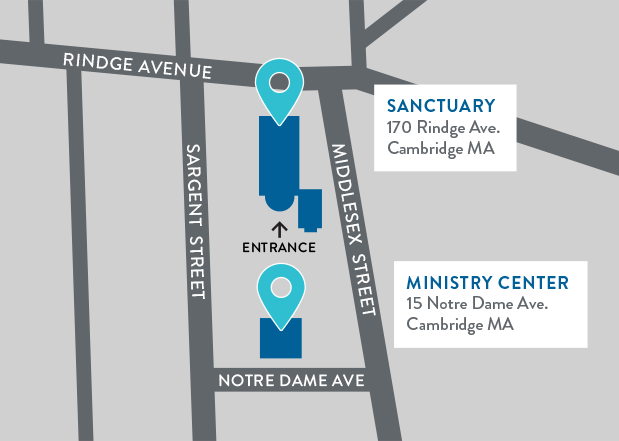
We are going to move to a time of communion and also a time where the prayer team is available at the rear of the Sanctuary if you would appreciate 1:1 prayer.

As we move toward communion this morning, we come carrying all kinds of seasons with us. 

Communion reminds us that faith has always been something shared at a table. On the night before his death, Jesus gathered with his friends and took ordinary things, bread and a cup of wine, and gave them new meaning. Bread broken as a sign of his body, broken in love for the world. A cup poured out as a sign of a new covenant — a new way forward shaped not by domination or fear, but by love and relationship.

And maybe that’s part of what we remember each time we come to this table, that God is always making something new among us whenever we remain connected to one another, through all seasons…. Whenever we forgive one another. Whenever we make room for people to bring their whole stories, histories and hopes to the table. Whenever we create spaces where people no longer have to grow all tangled up on their own.  

So this morning, as you come forward to receive communion — (a gluten free cracker and grape juice), we also invite you to take a small plant from the tables behind the communion stations and place it in a basket along the wall installation.

And if you’d like, you can also splash a small bit of water onto the plant before you place it there, a small prayer of hope for what is still growing among us. 

In this participation may you remember that we belong to one another, and to this living, growing world God continues to nurture among us. Come and receive nourishment, embody nourishment for one another and together may we tend what is still growing among us. 

Benediction: May your days ahead be filled with a season that offers you life to the fullest. A time for rooting and a time for growing in the love of God, among one another, and with this living world that continues to nourish us all, with the Spirit of God.  

A Theology of Creation – Ours and God’s

The sanctuary that we’re in right now – or that we’re watching online – was built nearly 125 years ago by the French Canadian immigrants who established their own Catholic parish here. And a lot of those founders who built this church worked in the area’s brick-making industry. I wonder if they built this church with the very bricks they made with their own hands. We are so grateful for what they built. Thank God for the work of those who came before us.

Now a lot of that brick-making industry centered around a big clay pit down the street, right next to the New England Brick Company factory that operated in some form for about a 100 years. 

That clay pit must have been a really loud and dirty and messy place. I bet that generations of workers came home with the stains and the smell of that place on their clothes, like I used to come home from my shifts as a waiter at Denny’s when I was 17, stained with catsup and reeking of cigarette smoke.

After the brick company closed in 1952, the city used the cite as a dump. 

People in cities make a lot of trash, and American people in American cities make an especially large amount of trash, and it all needs to go somewhere to get compacted and piled up or buried or burned. And for a couple decades, until the early 70’s, a lot of Cambridge’s trash went to the old clay pit – now the city dump – just down the street from here. 

It must have been about as loud and dirty as it ever was as a clay pit. And I can imagine how the smell would have carried around the neighborhood on a hot, humid, windy day. Our spiritual ancestors in this room might have  prayed their prayers sometimes with the reek of garbage floating through the windows just a little bit. Thank God for incense.

Around the time I was born, the MBTA was starting to expand the Red Line south to Quincy and north up here to Davis and Alewife, and they needed a construction staging area, and a cite to dump their dirt and debris. And so the city moved their dump elsewhere, probably trucking waste outside of town, and let the MBTA use the old clay pit and city dump for construction waste until they were done by the mid-80’s.

And then Cambridge had this huge chunk of land with mounds of old clay, mining debris, trash, dirt, and junk and had to decide what to do with this messy, dirty pile of land.

And what they did is this:

They built the biggest city park in Cambridge, full of walking paths and athletic fields, and grass, and wetlands, and playgrounds, and public art, and a dense forest of native shrubs and trees. It is really so beautiful. 

I hope you’ve been there before. It’s called Danehy Park, just across the train tracks from our sanctuary. I’ve walked and talked there with many of you, because it’s a beautiful place for that. It’s a green treasure, really, for play and rest and memory making and oxygen making. 

And given all the other things this land was before it was transformed into a park, it’s an incredible story of redemption and of new creation. All that is possible when together we say yes to God’s calls to ever-increasing creativity, novelty, and beauty. All that is possible when we partner together in new creation.

 This Mother’s Day, during our spring series Something New on co-creating with God, I want to thank God for everyone and everything that has co-created life for us, and I want to encourage us all to look for and step into our many opportunities to be co-creators and re-recreators as well.

We know something about this. Because ever creating and recreating is what our moms did for us, to the best of their ability. To be a mother is to co-create life with God, after all. And even when it wasn’t our moms who did this, it was other nurturers in our lives. No matter how blessed or bleak your childhood and young adult years, I am sure that at least sometimes, someone was noticing you as you were and looking to encourage and nurture the best that was possible there. 

Someone’s done this for you, and most likely, if you’ve learned to be a nurturer at all – whether you’re a mom or a dad or a teacher or a friend, or a partner or mentor to someone else at all, you’ve tried to do this as well. To notice the way things are in someone or something, and be a part of nurturing and recreating something more. 

A great example for us is the most famous mother in our faith tradition, Mother Mary. I want to notice Mother Mary as an example of partnering with God in recreation, ever creation, creation out of the depths, as a model for our personal lives.

And then I want to end with a call and a prayer for recreation in our public lives – in the great cultures and systems that are decreating our societies and our earth as we speak.

Mother Mary is the 5th most named person in the Bible’s biographies of the life of Jesus, and her story begins with some very strange circumstances her life offers her. 

Luke 1:38 (Common English Bible)

38 Then Mary said, “I am the Lord’s servant. Let it be with me just as you have said.” Then the angel left her.

Let it be, let it be, let it be, let it be.

God invited Mary into a life she hadn’t been looking for – an untimely pregnancy, too soon, too young, too much responsibility. The beginnings of her family life on very different terms than she would have wanted, a lifetime of rumors and scandal. Impossibly beautiful and holy upside, to bear and birth and nurture a child of God with a powerful call upon his life. But no doubt impossibly heart-wrenching challenges and loss as well.

Mary’s call was utterly unique in one sense, but also a kind of magnified version of every parent’s call. 

This will be inconvenient and it will cost your body and your heart and your resources more than you might imagine. You aren’t good enough. You will fail. But it can also be glorious and good beyond words. Will you say yes?

And Mary says:

Yes, let it be.

She gives consent to the possibility of co-creation with God. 

To re-create takes our consent to what is now today – however hard, however de-created, as well as to what is possible tomorrow – however unlikely. 

To be part of recreation takes realism and hope. It takes acceptance and dreams, and the will to be part of making them so. 

Luke 2:21-22 (Common English Bible)

21 When eight days had passed, Jesus’ parents circumcised him and gave him the name Jesus. This was the name given to him by the angel before he was conceived.

22 When the time came for their ritual cleansing, in accordance with the Law from Moses, they brought Jesus up to Jerusalem to present him to the Lord. 

Mary prays for Jesus, and along with her husband Joseph, she dedicates/baptizes him in the temple, her version of our child dedication or baptism in the church.

She’s nurturing the small seeds of what is possible. Asking for God’s help and support, and the help and support of her community. 

There’s no recreative power without faithfulness in small beginnings. 

If your mamma prayed for you, or sang to you, or read to you, then someone was faithful to the creative possibilities of your life. Somebody fed you, or you wouldn’t have made it to where you are today. And somebody has loved you – however imperfectly – or you wouldn’t be in this room today either. Thank God to everyone who has been faithful in our small beginnings. 

And friends, when we are faithful in small beginnings, we stay open to playing a part in God’s great creative possibilities. No dream, no change, no great deed or love story ever happens without showing up the first and second time, writing down the first and second word, trying again after we’ve failed, praying for help when we don’t have enough.

John 2:1-5 (Common English Bible)

1 On the third day there was a wedding in Cana of Galilee. Jesus’ mother was there, and

2 Jesus and his disciples were also invited to the celebration.

3 When the wine ran out, Jesus’ mother said to him, “They don’t have any wine.”

4 Jesus replied, “Woman, what does that have to do with me? My time hasn’t come yet.”

5 His mother told the servants, “Do whatever he tells you.”

Jesus grows up, but he’s living a quiet life, a private life, until this. Mary encourages something more beautiful. She’s a holy nudge in her son’s life. She gives that little push out of the nest.

Do what he tells you. My son’s got a light that’s got to shine. 

I want to know what neighbors around here smelled that trash heap and thought, you know what would be great on this site – a green, garden paradise. Or what Cambridge bureaucrat looked at that dump of an MBTA storage mound and thought: I see soccer fields. We can do it.

We don’t create out of nothing. Ever. We re-create out of something that came before. Which is mostly how God creates and re-creates as well.

If we’ve got a century’s worth of trash and toxins on a 50 acre spot of urban land, we don’t pray – God, make it go away. Make it clean. Make it beautiful.

That would be asking for God to create something out of nothing. And we don’t think God or us works that way. So instead, we might pray – God, can you inspire us for what’s possible here, and give us the resources and creativity and strength to make it so. 

And together, we recreate those 50 acres into Danehy Park. That’s creation out of the depths. That is ever creation. Transforming what is fallow, or even what has been torn apart through decreation, through beautiful acts of recreation. 

This is what our Ever Creator God does. And it is one of the highest calls for humanity as well – to join God in ever-creation. To look at the stuff in our land and our lives and our cultures that has lain fallow or has been torn about through decreation, and with the help of God and friends, to recreate it into something new and beautiful. 

Friends, so much in our lives looks plain and ordinary or maybe worse. Used up, wasted, unremarkable. And so much in our world looks the same – kind of unremarkable nothing, or maybe used and torn down – decreated. Re-creation sees differently. Re-creation sees holy possibilities in everyone, and everywhere, and everything. 

And since it’s hard to do this for ourselves – see the holy possibilities in our own tired lives, I suggest we try to be like Mother Mary – and see it in someone else every day. Be the holy nudge that encourages someone else’s good work and small beginnings and holy possibilities. 

We need a lot more of us saying:

I see you, I believe in you, you’ve got this, I’m proud of you. 

Because without faith in God and faith in ourselves and faith in one another, we don’t get much re-creation. Thank God for whoever has mothered and encouraged our possibilities – we can do it for someone else too. 

Mark 3:20-21, 31-32 (Common English Bible)

20 Jesus entered a house. A crowd gathered again so that it was impossible for him and his followers even to eat.

21 When his family heard what was happening, they came to take control of him. They were saying, “He’s out of his mind!”

31 His mother and brothers arrived. They stood outside and sent word to him, calling for him.

32 A crowd was seated around him, and those sent to him said, “Look, your mother, brothers, and sisters are outside looking for you.”

Sometimes we can exert too much voice, too much control, and faith means stepping back and trusting people to themselves and trusting them to God. 

Here Mary and the rest of Jesus’ family learns a hard lesson, that they don’t understand the path that Jesus is on and how he’s walking it. Here Mother Mary learns she has to adapt to young adult Jesus. She has to direct less. And she has to listen and accompany more. 

That’s a hard lesson for every parent as our kids go through the teen and young adult years. To keep showing up, to keep accompanying, but to talk less and listen more, to trust people to themselves and to God, whether or not it looks like it’s going well.

To say:

I’m here for you, but to be OK when your help doesn’t seem wanted. 

Mary gets it, though. Like a good parent, like a good leader or boss or coach too, she’s able to lean in but also to lean back, which is why she’s still welcome, still there at the end of things, or at least what seemed like it was the end of things, as her son was crucified.

John 19:25 (Common English Bible)

25 Jesus’ mother and his mother’s sister, Mary the wife of Clopas, and Mary Magdalene stood near the cross.

A stranger in the temple once told Mary that because of this special son of hers, a sword will pierce her heart. And here it does, as a sword pierces the heart of her son. Every child’s wound is a parent’s wound too. Because when we’re parents, a piece of our hearts stay with our kids forever. 

And so being a co-creator means suffering. There’s no other way. And sometimes suffering isn’t redemptive at all. It’s just pain.

But sometimes suffering and death are the compost of new life, and so it is here. Since Jesus’ death on the cross had power for reversal and new life almost no one saw coming. 

An image of love, a human and divine act of solidarity, a Roman attempt to shame a victim which ends up so shaming the empire that this crucifixion becomes the seed of which this very practice is banned and eliminated. Jesus is writing a story with God that will teach forgiveness and redemption and God’s recreative power even over death. 

And again, for Mary and Jesus, this is very much a unique story, but it’s not the only version of this story. 

In smaller ways, when we walk with people and suffer with them and stay with them when things are heard, we never know what might be true on the other side of the trouble. And that’s true when we let people suffer with us and walk with us as well. 

Friends, I share and celebrate Mother Mary’s beautiful story of co-creating with God today because I want us to celebrate the life in our bones and the possibilities in our tomorrows and to give thanks to every mother and every co-creative force who has been part of our stories in the past.

Thank you God for everyone who has believed in us, who has walked with us, who has suffered with us, who has taught us and trusted us and encouraged us.

And I share and celebrate Mother Mary’s beautiful story of co-creating with God because I want us to believe that we are called to this kind of nurturing love as well, and whether we are young or old, or have children or not, or whether we are anyone’s mentor or boss or friend or not, it is meant to be part of our story.

It is part of our birthright and call as human beings to co-create and re-create with God, our Ever Creator, who creates out of the depths, and who nurtures holy possibilities out of ever fallow field and every torn down dump of a clay pit, and every life on earth – however shiny and hopeful it looks or not. 

You, my friends, are God’s co-creative partners in all this. 

Someone and somethings, no doubt a few someones and somethings, need your part in their story to encourage them, to pray for them, to build them up too. 

And friends, our country needs this too. Badly. 

250th Anniversary of the United States

In less than two months, this country is going to celebrate its 250th anniversary. 

And friends, one thing that almost all of us agree on these days is that we are not in great shape.

I think of the era of my birth, just before this country’s 200th birthday, and there was plenty that was bad in this country then. The early 70’s were not a time of big national hope and optimism. They were tumultuous and violent times. 

And yet, I look back and see all this re-creation that was going on in that era. 

  • The Clean Air and Clean Water acts had just been passed.
  • The Individuals with Disabilities Education Act was passed.
  • The Equal Rights Amendment passed in both houses of Congress, even if all the states didn’t ratify it in the end. 
  • And in 1965, one of the crowning achievements of the Black Freedom Movement in America that we call the Civil Rights struggle was passed – the voting rights act, which guaranteed equal access to voting and equal access to federal representation for all American citizens, regardless of race.

There was a sense that we were taking our nation’s founding promises seriously – of flourishing and justice for all the people, all the people.

And yet here we are, on the verge of this country’s 250th anniversary, and every one of the things I just mentioned is being put at risk, blocked and undone by federal reductions, modifications, lack of oversight, and active sabotage. Sometimes it feels like we’re living in this great age of civic decreation, where apathy and racism and fear and resentment and mean-spirited, cruel attacks are undoing so much hardfought promise and possibility in this country, still struggling after 250 years to fulfill its promises to itself and all of us. 

And friends, moments of attack and de-creation like this look like someone heaping big dumptruck loads of trash on the park we thought we were making. They look like our tender child we’ve been nurturing is getting put on the road to his crucifixion. 

These days feel like moments of despair – times to move away or just stay put and give up. 

But my hope is we can shed our tears and feel our fears and shout our frustrations when we need to, but then partner with one another and God again in re-creation. To be people who, when others tear down, say we’re going to be on the team that builds up. 

I don’t know how we re-create democracy after these times of white supremacist, autocratic rule. But I know people are organizing. This past week many thousands of leaders from the churches of America’s largest Black church denominations gathered together on calls to start organizing for the mobilization and representation of Black voters. To insist that while the Supreme Court can tear apart the Voting Rights Act and try to tear apart our communities, we will not go silently and just yield to the erasure of the Black vote in America.

And I don’t know exactly what this is going to ask from us and how we can participate yet, but friends, I know that I don’t want to just shrug my shoulders and do nothing, when my Black Christian brothers and sisters call upon our votes, our voices, our bodies to participate in this struggle. 

Building a beautiful park out of a dump, nurturing the life and call of a child – even a child like Jesus – may seem like small things compared to re-creating a tottering nation. 

But I like to imagine some of the same ingredients are there:

  • Honesty about the way things are today
  • A vision for the future we want to see, that we think God would want to see.
  • A belief that if things have changed before, then things can change again
  • And enough faith, hope, and love that we keep showing up and keep doing our part.

These days, I’m not hopeful for this country of ours. I’m not. But for most of us, it’s the only one we’ve got. 

And after all, It is part of our birthright and call as human beings to co-create and re-create with God, our Ever Creator, who creates out of the depths, and who nurtures holy possibilities out of ever fallow field and every torn down dump of a clay pit, and every life on earth – however shiny and hopeful it looks or not. 

We, friends, are God’s co-creative partners in all this. 

And this country certainly needs our part to encourage them, to pray for it, and to build it up to something better.

New Beliefs, New Life

I’ve been on a little preaching break since Easter, and it’s been beautiful the past three weeks to listen to three different preachers explore the creativity and artistry of our living, life-giving God. How this God who makes all things new invites us to be God’s co-creative poets and partners – loving with God, gardening with God, exploring new ways of knowing with God. 

I’m so grateful for each of the three women we’ve heard from these past three weeks – our own pastors Ivy and Lydia and our guest Keri Ladouceur. It still stuns me that for most of the past two thousand years, churches shut down and blocked the gifts of women teachers and preachers. How much healthier our churches would have been, how much better our faith and our witness if we’d been taught by all God’s children. 

I’m grateful for you, Ivy, Lydia, and Keri, and I’m grateful to be alive today. 

Today I’m going to talk about the new life that can grow in us and through us when we embrace new beliefs that we’ve been missing. When our beliefs get larger, freer, more loving than they used to be. 

My friend Tom asked me last week at a conference we hosted here at Reservoir to say something about a belief theology that was making my life better. What’s a belief about God that is changing my life? 

And this is the first one that came to mind. It’s about the everywhereness of God. 

Sounds uncontroversial at first, maybe boring. Classically, Christians have taught that God is omnipotent, omniscient, and omnipresent – all powerful, all knowing, and everywhere. 

But it turns out all those “omni” words are complicated, and people don’t all believe the same things about them and also don’t live like they’re aligned with their belief.

Here’s what I used to believe. I used to believe that God lives in the heavens, wherever that is. And that here on earth, there were particular places that God lives. I think I felt like God lives in religious places, like in churches. And that God shows up too, when we’re doing religious things, like reading the Bible or praying. After all, Jesus said:

Wherever 2 or 3 of you gather in my name, there I am.

And when I thought about it more precisely, here’s what I believed: that God lives in the souls of people who believe in Jesus and who, because of that, are in a special relationship with God, saved by God’s grace, adopted as God’s children.

And this is actually a pretty historic belief in the Christian church. That through God’s Holy Spirit, God lives in the souls of baptized believers in Christ, and that God’s presence is magnified when those baptized believers in Christ gather together, like in church. 

And I’m not going to do it today, but you can make a case for this with a bunch of Bible verses. It’s a coherent belief – that the earth and its creatures – including all of us humans – are lost, and that those of us who believe in God through faith in Jesus Christ are saved, and it’s with us that God lives. 

But then sometimes in the Bible, it pushes against the limitations of this belief. 

Like when the poet says this in the Bible’s prayer book of the psalms:

Psalm 139:7-8 (Common English Bible)

7 Where could I go to get away from your spirit?

    Where could I go to escape your presence?

8 If I went up to heaven, you would be there.

    If I went down to the grave, you would be there too!

God’s in heaven, but when I die, God will be there too, in the underworld.

Or when the Bible says this:

Jeremiah 23:23-24 (Common English Bible)

23  The Lord declares, Am I a God
    who is only nearby and not far off?
24 Can people hide themselves in secret places
    so I might not see them?
        Don’t I fill heaven and earth?

The prophets, like Jeremiah, correct people when their societies are unjust and they need to change their ways. Or when their beliefs are too narrow, and they need to change their mind. And get larger, freer, more loving in their thinking about God.

Like here: people are teaching that God is only found in the words and lives of particular people. And Jeremiah says:

no, no, no. You can’t limit God’s presence or activity or truth. God fills heaven and earth. God is everywhere.

The New Testament – the Christian scriptures – teach the same.

Like here in Acts, when the apostle Paul says:

Acts 17:27-28 (Common English Bible)

27 God made the nations so they would seek him, perhaps even reach out to him and find him. In fact, God isn’t far away from any of us.

28 In God we live, move, and exist. As some of your own poets said, ‘We are his offspring.’

God isn’t far away from any of us. We are all God’s children. In fact, we and all creatures live inside of God. 

Woah. 

Here’s another spot:

Colossians 1:17 (Common English Bible)

17 He existed before all things,

        and all things are held together in him.

All things – heaven and earth, people and plants, moons and molecules, gravity and thermodynamics – all things are inside of God, held together by God. 

God is everywhere – larger, freer, more loving than we might have imagined. 

There are technical ways we can talk about this.

Call it radical omnipresence – this everywhereness of God.

Call it panentheism – the doctrine that teaches all things are in God. Not pantheism – that means everything is God, but panentheism, that everything is inside of God.

Call it divine entanglement – that when we say God didn’t want to be God without us, we mean everything and everyone, not just humans. And we don’t just mean God doesn’t want to be God without us, but that God can’t be. That God is present to, entangled with, this all matters – everyone and everything. 

I don’t much care what we call it, though. I want to tell you how it’s changed me to start to live it. 

Because what we believe is some of the soil out of which our very lives grow. What we believe about God is the soil of the garden of faith that grows in us. And new beliefs, when they are truer and better than what came before them, can bring forth new life. 

Let me tell you some ways I’m feeling this.

The radical everywhereness of God explains a lot about our religion.

The theologian Willie James Jennings says that so much of Western colonialism hinged on a terribly mistaken belief. The land theft, the plundered treasure, the plundered people, genocide, slavery, the invention of race and the idea of white people – the whole diseased social imagination of the Western World – begins with what Jennings calls a “breathtaking hubris,” a critical mistake in a too narrow doctrine of divine geography and providence. 

Jennings says that the first Spanish colonizers, and all the ones who followed them,

“discern the guiding hand of God in the way (they) arrived and remained in the New World, while discerning no such divine involvement in the lives of native peoples.” 

God is with us, they thought (the baptized Christians) and not with them. 

And when you imagine the transcendent God to live and reign only in the spaces where your religion has planted your flag in his name –  well, then you more easily misunderstand, diminish, and mistreat the geographical terrain and culture you have assumed is godless.

A terrible belief that gives us a lot of the pain and dysfunction and war of the past few centuries of human history.

  • Bad soil, bad garden.
  • Bad beliefs, bad life.

And I explore this a lot more in the first chapter of my new book.

But this morning, I’d love to share with you what starting to believe in the radical everywhereness of God is doing for me not just intellectually but in my everyday life. 

Faith in divine entanglement is probably the only thing that gives me a chance at being a decent pastor, in the times when I am a decent pastor. Because I’m not all the time.

I don’t know that it comes naturally to me. When I was a kid, I loved to talk, and I loved words and books, and I became an English teacher, where I got to talk a lot and tell people about words and books. Awesome, that worked. 

But being a good pastor is really more about listening than speaking, and it’s more about lives and relationships than it is about words or books. And that stuff didn’t come naturally to me as a kid at least. 

But when I’m tuned in to the radical everywhereness of God, I start to get really curious about everyone and everything, because God’s there, and so it’s all sacred.

And that means God lives with each and everyone of you friends, and with every other person I will ever see, who I will ever meet, who I will ever talk to. And that makes me curious. It makes me want to ask questions, makes me want to listen. Because I wonder more often, what’s going on with you that’s sacred. And I want us to see that together.

Let me put this a little more bluntly.

Belief in the radical everywhereness of God is often what makes me not be a jerk, when I’m not a jerk. Because sometimes I am.

For example, this winter, my daughter asked me if I’d go to a writing group with her. I think this was partly because we both like to write. And she was writing poetry and she knew I was about to launch a book, and so she was like – Dad, come with me to this writing group. Let’s try it together.

Now the cynical part of me thought maybe my daughter wants me to come because this way she can get a ride. She doesn’t have a car or a license, and this thing would have taken a long way to get to on the T or on her bicycle, and I have both a driver’s license and a car, so when my daughter was like – Dad, I really want to do this together. – she probably knew that was the most foolproof way she could have found to get a ride, and she was right. So off we went.

But when we got there, I didn’t want to write at all, partly because I was tired, but partly because I was too busy being judgy and eye-rolly about the whole scene. It wasn’t just a writing group, but it was a Buddhist writing group, and it was led by a white zenmaster.

And the room was full of tokens of Asian culture and Buddhist practice, and the walls were full of art I judged as kind of cheezy, and the room was full of people that when they first introduced themselves, didn’t seem much like serious writers to me.

And so during the writing time, I was thinking about cultural appropriation and kind of looking down on the space I was in and everything that was happening there.

But then when it came time near the end for those who wanted to read what they’d been writing, something shifted. First, my daughter read a bit of the poem she was working on, and I loved it. And I thought that the language she’s using is so interesting, and that experience she’s alluding to is so deep, and I just love that my own child has such an interesting way to say something so interesting to say about this life that is also so interesting. So beautiful. 

And that shifted something in me, made me more open about what was going on in the room. What if God is here? And what if that can make me more curious, not judgmental. Thank you, Walt Whitman and Ted Lasso. 

And so as people shared, I tried to hear the sacred in it all, and sometimes I did, so much so that as I left, I looked that white zenmaster in the eye and I didn’t say: I’m sorry I judged you so much because that would have been inappropriate and probably unhelpful, but I did say:

thank you for having us in your space, I’m grateful to be here.

Because that was true. 

Because whatever I thought, God was there. And that changed me. 

New soil, new garden. New belief, new life.

I feel this everywhere. 

In my relationship to my own past and future – since there’s no trauma I lived where God was not there, no past I’ve had, no future ahead where God is not.

I feel this in my politics, so that I can walk into a space of community organizing and social justice work, like I did last week at the shareholders’ meeting of a bank to try to interrupt something terrible, but I can think: no enemy of mine is just an enemy. Because God is with them too. 

And so instead of treating the people you might have called our opponents, or the target of our action, like jerks, we could treat them like, you know, people. And make our point, and make it forcefully, but also make it respectfully and humanely – child of God to child of God, like God is with us all, because I think that’s really true. 

  • New soil, new garden.
  • New belief, new life. 

All this makes me wonder if I’m entering into my Aunt Ethel phase of life. 

When I was a kid, I had a great Aunt named Ethel who had suffered terribly. She had some serious mental breakdowns in the 40s and 50s, and I gather there was immense challenge and some violence or at least risk of violence in it, and she had spent at least a couple of decades institutionalized. 

And if you know anything about the residential mental institutions of the mid-twentieth century in America, you know there were some terrible things that happened in many of those places, and I only know the smallest amount of all that my Aunt Ethel went through before she ended up in one of those places, and all that she endured while she was there.

But I know that when I was a child, she was stable, and she was living in a group home, and she spent Christmas with us most every year. And the one thing I remember about her is that to her, everything was beautiful. 

No matter what gift you gave her, no matter what you said, it was beautiful. 

And I’d never known anyone who talked that way. 

  • Oh, that’s beautiful.
  • Oh, Steven, that’s so beautiful. 
  • Oh, Steven, you’re so beautiful.

And I didn’t have words for it then, but I loved that because it was beautiful. My Aunt Ethel was beautiful.

And the more curious I get about the radical omnipresence of God, the more I feel just like she did.

There’s no place I can go and God is not already there. How beautiful.

God fills heaven and earth, and inside of God, we live and move and have our being. How beautiful.

There is nowhere that God is not. You and me, and earth and sky, and fields of flowers, and sewage treatment plants, and friend and foe and joy and heartbreak – it’s all somewhere God lives, and all somewhere God hopes and breathes and loves.

So beautiful, so beautiful, so beautiful.

If It Dies, It Bears Much Fruit

I’m still feeling vertigo after Good Friday and Easter. It’s a weird season in the church liturgical calendar, where one day we’re grieving death in a dark sanctuary and then two days later, glory Jesus is risen and we’re supposed to have some triumphant celebratory spirit. It’s disorienting. 

But maybe that’s why Lent is so long. Some 40 days of fasting, alms giving. I think I’m uncomfortable with it because I like avoiding the discomfort of sitting with death, and so when the news of resurrection comes, it feels fake. Whoopdeedooda. 

Of course, why would I feel the heights of euphoria of resurrection when I’ve been numbing myself of the feelings of sadness and grief of death, right?

So today, for our post-easter story, I want to take us to thinking about death some more. Yaaaaay!

Our Scripture reading today comes from 

John 12:24 

Let me read for us. Jesus says this to talk about his upcoming death.

I assure you that unless a grain of wheat falls into the earth and dies, it can only be a single seed. But if it dies, it bears much fruit.

Let me pray for us. 

Risen Lord, Your life, death and resurrection shows us a new way. You showed us God in a whole new way. Help us to see clearly. Even through the doubt. Even through suspicion. Even through apathy or cynicism. Help us to see the throughline of love, especially in the midst of death and darkness. Reveal to us your love that breaks through it all, our distractions and egos. We pray in Jesus’ name. Amen. 

I thank God for the spring sunshine beaming down on me these days. I don’t know much about plants and stuff, so I don’t know the names, but those yellow flowers on bushes, and the pink ones on the tall trees, and the beautiful yellow and white ones that look like umbrellas kind of open. So pretty. This is a product of knowing English as a second language and being raised with parents who don’t speak English. I don’t know plant names and I don’t know kitchen utensils in English. I just learned that the big spoon for soups are called ladles a few years ago. 

So, how many of you guys are gardening these days? Planting stuff? Cool. How many of you had dirt underneath your fingernails this past week? Nice Nice. Oh man I don’t know much about gardening but I love going to Home Depot in the spring. I know some of you go to fancier places like a nursery, like where the precious plants live? 

One spring, I caught the green thumb bug. I was like, I want to try it. Eat from the land you know? I work with the Kids Ministry team, so I hang out with Dan, our elementary school pastor, who actually grows his own stuff, with chickens and all. Oh I look up to Dan and people like him. So I bought some seeds one spring. The problem was, I brought the seeds home and I had no place to plant them. I mean I have a yard but it’s covered with stuff already. So I started to pull up some weeds and clear the sticks and rock on a little patch of my yard. But as I started doing that, I realized the weeds, there’s more than just weeds down there. They were like thick wood vines that are so interconnected, that when I started pulling on one, there was no end and I found myself pulling and pulling till I sat on my bottom with a huge tree in my hand. 

But I was determined to plant my seeds so I can eat kale in 8-10 weeks. I pulled and pulled on the weeds and the vines to clear the dirt so much that from that one go, I pulled a muscle. Next day, my hands were sore. I didn’t have the right tools. 

Why is it so hard to make something new? 

I didn’t know before I started that I’d find roots bigger than my face underground. I didn’t know before I started that I needed huge scissors. I didn’t know before I started that I had to touch worms with my bare hands. 

  • What are you trying to grow anew right now, in your life?
  • Is it a new relationship?
  • A much needed new job?
  • A new hobby that apparently is supposed to give you life but you feel like you just suck at it? 
  • What did you not know before you started?
  • What barriers and challenges are you pushing through right now?
  • What’s getting in your way of actually accomplishing a new thing you are trying at? 

Good. That’s right. If it’s hard, you are on the right path. Because

“unless a grain of wheat falls into the earth and dies, it can only be a single seed. But if it dies, it bears much fruit.”

What needs to die? What needs to break open? To birth something new in your life right now?

.You know after the resurrection of Jesus, who Jesus was and is, how Jesus was talked about expanded in all kinds of ways. He came to be called so many of these titles thereafter,

  • Messiah
  • Son of God
  • Lord
  • Words of God
  • Wisdom (Sophia) of God
  • Lamb of God
  • True Light
  • Light of the World
  • Good Shepherd
  • True Vine
    Most of these names came, not from Jesus, but from the community. From their experience of the resurrected Lord. The community had more and more to say. 

Marcus Borg, a professor of religion at Oregon State says, that the community confessed, 

“We have found in this person the light of the world who has shown us the way out of darkness”

“We have found in this person the spiritual food that feeds us in the midst of our journey even now.” 

And so they came up with names and titles and adjectives about Jesus saying, 

“This one who was among us as Jesus of Nazareth is also the Word of God, the Son of God, and the Wisdom of God.” 

But why? Why did they see him as such? How did Jesus make such an impact on these certain people? And I mean these certain people, because certainly it wasn’t everyone. There were plenty of people who saw what happened in the crowd and didn’t become followers of Jesus. 

Why was Jesus such a bright light, enlightening them in such a provocative and powerful way? 

I think it’s like this. 

You know when you’re sleeping on a plane, maybe on a redeye or going overseas. Everyone has their window shades down. You’re in the middle aisle and you don’t have full control of the window shade. Only the window seat person has the power to bring light or to keep you in the darkness. But the moment, when you hear the window seat person next to you pull up that shade, and you pull off the eye mask and squint, and you try to get a glimpse of the sky, but it’s at first, nothing but white bright light and that’s all you see. 

You see, your placement, where you are located matters. If you were in a brightly lit room with lights on and you open up a shade, it only makes a little difference. You are not as impacted. 

You see, you can’t understand the transition from Good Friday to Easter, from death to resurrection if you don’t know the darkest depth of despair and death. It’s not impressive to you. It doesn’t impact you. 

That’s why Jesus says in Matthew 9:12-13

“It is not the healthy who need a doctor, but the sick. 13 But go and learn what this means: ‘I desire mercy, not sacrifice.’[a] For I have not come to call the righteous, but sinners.”

And

In Luke 7:47 Jesus says, 

“47 Therefore, I tell you, her many sins have been forgiven—as her great love has shown. But whoever has been forgiven little loves little.”

So if you’re righteous, and you are sacrificing so much, good for you, if you are healthy and fine, if you don’t get sin in your life that you’ve worked through or wrestling with, you’re not going to be desperately in love with Jesus. 

But if you are sick, you are steeped in sin and you are down in the muck and mire. And you are struggling, and you are trying to find something new but knee deep in just smelly smelly compost and weeds and rocks and thistles, there, right there, is where Jesus is. To you, in the midst of your dark world, Jesus is True Light, the Light of the World.

I’m not saying stay there, or excusing the systemic injustice which is sin, and just saying,

‘oh just suffer on this earth for the Lord and you will see heaven after you die,”

no that is a twisted misused version of the gospel to keep the oppressed people sedated with the watered down gospel. No. In your suffering, in your pain, in your struggle for waiting and waiting for a job that won’t come, in your stress of trying to figure out how to pay rent or feed your family, in your anger and grief of sexual abuse that’s reeked havoc in your life. In your loneliness and rejection from supposedly loved ones, in your heartbreak of being cheated on or blamed for everything broken in your relationship, in your struggle with addiction, in your fight with yourself for all the blows the worlds put on you and the blows you put on yourself, 

In the death of Jesus, he identified with you, as one who is suffering. If you don’t know that identification, then the meaning of resurrection and new life means nothing to you. 

You know what’s one of the most powerful ingredients you need for you to grow a new plant? Manure. You know, poop. The thing that is processed and rejected from the body because it’s unnecessary and you get rid of it, but then you really should be putting that in the soil to grow new life. And the funniest thing about poop is that it smells really bad. Something new can come out of something so bad. 

That smell, it’s putrefaction, the final stage of decomposition, where bacteria and fungi break down tissues, causing soft tissues to liquefy, releasing strong odors and causing swelling through gas production. Putrefaction.

Before Jesus raised Lazarus from death, and this is one verse I really like in the King James Version. 

John 11:39 Jesus said, Take ye away the stone. Martha, the sister of him that was dead, saith unto him, Lord, by this time he stinketh…”

And it is a holy beautiful work when someone helps make it less stinketh, 

When the Sabbath was over, Mary Magdalene, Mary the mother of James, and Salome bought spices so that they might go to anoint Jesus’ body.

as Mary Magdalene, Mary the mother of James, and Salome bought spices so that they might anoint Jesus’ body, 

“39 Nicodemus, the man who earlier had visited Jesus at night. Nicodemus brought a mixture of myrrh and aloes, about seventy-five pounds.[e] 40 Taking Jesus’ body, the two of them wrapped it, with the spices, in strips of linen.”

John 19:39-40

And just as Nicodemus, the man who earlier had visited Jesus at night, my good pastor friend and mentor Fred Harrell always calls him Nic at Night, he brought a mixture of myrrh and aloes, about 75 pounds, wrapping Jesus body with the spices and strips of linen. 

What is stirring up a stink in your life? ..

I’m really sorry that you’re going through it. That really stinks. 

And is there anyone who is bringing you spices, myrrh, aloes, and linen at all? Anyone who is tending to you in the midst of the decay and decomposing? 

Again, I’m not trying to explain away injustice or wrong, or sin, and just glaze over it. It sucks. And if it needs to die, let it die. So that a new thing can arise from it. 

I was sitting there at the Good Friday service, with a beautiful program in my hand, inviting me to sorrow & surrender. I had sorrow, just underneath the surface, but I couldn’t surrender because if I did, I wouldn’t have enough tissues on me to wipe up all the tears. It’ll take too long. And it’s an hour long service. 

I sat there and read the card with reservation. It said: 

SORROW & SURRENDER STATION

“Father, into your hands I entrust my life.” — Luke 23:46

Visit the table alongside the stage. Jesus didn’t and doesn’t turn away from what’s terrible. He enters it. He holds it. Even in the shadow of death. You may come to this station in defiance, in sadness, or in deep need — because of the times we are living in, or because of the time you are living through. Write down what weighs on you, what aches, what you long to entrust to Jesus. If you have no words — take a branch or a twig to the cross as a symbol of all you need held by Jesus.

I so appreciated the inclusion in naming one of the emotions that I was holding, defiance. I had sorrow, but I didn’t surrender because I am frustrated with this world and with God. I was sitting there thinking I know Easter celebration comes in a few days, but God, look at this world. What did you actually accomplish on the cross? Victory over death? That’s a lie. Where? People are dying, for no good reason, children, innocent children are dying with bombs and starvation. People with good faith ask, Where is thy sting? But I’m here saying, it stings, a lot, and where is this victory? Everytime I open up the news, a new sting, a new stink. It is nauseating and turns my stomach. 

I had no words, except some curse words. I wrote them down and covered it with a pretty little branch and intertwined it into the cross. I was still angry but kind of felt nice, but still quite numb in my body from all the withholding and not surrendering I was doing. 

And then towards the end of the service, from my seat, I heard a wailing. A deep deep cry and wailing from the foot washing station. And how good it felt to hear someone else’s unfiltered voice of sorrow that I am too contained to release. How good it must be to let go of it all. To surrender. If that was you, my heart breaks with you, and thank you for your resounding sorrow that made me feel like I wasn’t alone in my messy grief. At that moment, I finally kind of got the “Good” part of Good Friday. 

I’m a slow processor. A slow reader, who reads a chapter of a book and has to marinate on it for weeks before moving onto the next chapter for really emotionally challenging books. I’m a late bloomer, or immature, still growing and learning. It’s after Easter but I’m still stuck at one of the stations of the cross because I can’t move on. That’s alright. I’m like Mulan. And that’s not racist. I mean I kind of heard that the Asian Disney princess story was written by white writers, but I still liked the movie, like I don’t know, sometimes stereotypes hit home (sometimes not), but “bring honor to us all” I relate. But also the blossom thing. 

Mulan’s sweet father saying,

“My, what beautiful blossoms we have this year. But look, this one’s late. But I’ll bet that when it blooms, it will be the most beautiful of all.”

Take your time to bloom. Take your time to root your seed. 

For the seed to soak in the water, in the dark cold dirt, for a while. 

Did you know that tulips, my GOD they are pretty but you can’t just plant the bulb in the spring when you get jealous of your neighbors’ blooms in April. 

You have to plant them according to The Plant Hardiness Zone Map. 

Massachusetts is Zone 6  coldest in winter being (-10°F to 0°F)

Best planting time: Mid-October to early November

You have to plant it in the middle of winter, in the cold and you won’t see a thing till like at least five months later.

What does it look like for you, to be buried in the cold dirt for five – six months? What does it feel like? Are you okay? You hanging in there? 

God is in the deep with us. The God revealed in Jesus is the seed that fell and died and produced many fruit. That’s how Jesus talked about his death. And look at all you pretty delicious fruits, thousands of years later, dripping in sweet nectar? Jesus is the true vine because he knows what it’s like to have to crawl up and tangle up slowly. Hang in there. God is with us in the dirt. In the death. If you’re in it now, may you taste the fruit soon I pray. And for that fruit to fall and decay and give of themselves for something new again and again together. Amen. 

God’s Constellation

Well, if you’ve been following along at all with the Artemis II mission, the voyage of the spaceship “Orion,” named “Integrity” by the crew, you know that the 10 day journey to the moon and beyond — came to a successful end on Friday. 

And I almost missed it. When they launched on April 1st, I was at community group and folks were talking excitedly about this mission. I had no idea it was even happening. And yet somehow in the span of nine days I’ve found myself completely captivated.

In part by the fundamental fact that human beings can leave this Earth, travel hundreds and thousands of miles into space, suspend themselves in space, trust every calculation, every movement, every person —  circle the moon, and arrive safely home….

I mean, the scale of it is incredible.

But this week, post-Easter, the pull I’ve been feeling hasn’t been entirely about the scale of this mission – but about the grounding I feel in witnessing what collaboration at this scale opens up. Something about this mission, this team, situated in *this* moment feels like it represents something new:

There were sooo many firsts. The crew alone:

  • Victor Glover, the first Black astronaut to go to the moon.
  • Christina Koch, the first woman to travel to the Moon.
  • Jeremy Hansen, the first non-US citizen a Canadian astronaut to go to the moon.
  • And Reid Wiseman, the first oldest person to travel beyond low Earth orbit. I’m sure he loves that first next to his name!

This crew is the first to  achieve the greatest human distance from Earth, breaking Apollo 13’s record.

The first “free-return trajectory” around the Moon, (they use the Moon’s gravity to “slingshot” back to Earth rather than relying on its own engines (less energy, less pollution).

And yes, these firsts matter.
Not just for the history books (if we’ll still have them)… but for the widening of the story still being written, the story for all of humanity going forward.  Somewhere this crew reminded me that something new and good is still possible — when we come together.

Being here last Sunday on Easter felt a little like that  — close to 500 people filling this sanctuary. A room full of stories and voices, generations and laughter and singing and contemplation.  A vibrancy of color, and kid energy, something alive and good and real — new life. hope. breaking through — resurrection! 

And I also know that by Monday and definitely by Tuesday, in many ways I came back down to Earth pretty quickly. It’s April in Boston and on Tuesday it was snowing, and sideways wind-ing, and dark and stormy.

And yet maybe that’s where resurrection actually meets us, where something new begins.

Not just in the moments that take our breath away, but in what it asks of us the very next day.

In those first days after Jesus’ resurrection.
Herod was still king.
Caesar was still in Rome.
The chief priests were still chief priests.

The empire still ruled. 

Jesus rose, but the systems that crushed him still stood. 

And we too, today – are still living with the insanity of leadership that seeks to use power to churn chaos and wield death as a hobby, that threatens war and violence in the same breath as “God’s name”. . . 

We are still navigating a world that often feels like it is unraveling more than it is being made new. 

And I’ll admit, part of why I found myself following this Artemis mission wasn’t allll awe —- it was a kind of escape. What would it be like to just step off this world, and up into a new world — for a while? 

But the longer I stayed with it, a reminder I didn’t know I needed surfaced, that we are still living inside a beginning….and we are the ones who get to shape what comes next.  And I don’t want to miss it. 

This crew, as elite as they are in some ways, reminds me — of us. That we are still people who reach….who live for, believe for, long to do something beyond us… something new.

We’ve learned how to reach the Moon — and we are still learning how to live on the Earth. And maybe that’s the deeper tug here, not only to travel beyond this world, but to bring that same curiosity, that same courage and sense of possibility into how we live with God and with one another.  INTO the making of the kin-dom of God, here and now. Earth-side.

Over the last 50 years, since the last journey to the moon, we’ve learned how to get there again — and get there better with advances in technology and science. 

But maybe even more than that, we’ve learned how to go farther, together.

And we can’t lose sight of that. Because collaboration (although risky and vulnerable), is what keeps us alive. And for these astronauts it’s not for the mere prize of victory gain, or ego-driven status. It’s for the love of this Earth, for this humanity, for the curiosity and belief that there is more to be discovered, that there is life beyond what we identify as life that can propel us forward. That there is always something new even at the edges of where we imagine. 

And that’s what we are leaning into, together this spring. We’re beginning a new series today, called: “Something New.” 

Because we believe in a loving, life-giving, creative, God. A God who isn’t finished creating this world — or with us. A God who keeps inviting us to discover that the sky and the galaxy is not the limit – to what shared life with God and shared life with one another can become.   

So in these days after Easter , after the promise of resurrection has been proclaimed, after we in our best efforts echo the refrain,

“Christ is alive, Christ is risen indeed”

in these days, when we wake up in the same world. A world that bombards us with images and words and realities that tries to convince us that death still has the final world. That nothing really changes.  Let us give ourselves to the life and the way of Jesus. So that  together, we live like life is still possible, and make it so.

What I love about fixating on this Artemis mission is that what is underneath the amazing feats of precision and coordination — is a kind of artistry on display, a rare type of beauty. Not just in the images we’ve seen of the earth and the Moon — but in the risk and vulnerability of a group of people really working together, TRUSTING one another  to participate in whatever way possible to shape what CAN BE possible. Even before it’s defined.

And maybe it’s that tension — between what we can see and what is still unfolding — that the disciples were trying to navigate as well. And it’s hard to imagine what could be possible when you are tired, grieving, and confused, overwhelmed.

For many people in Jesus’ time they were holding onto a promise that God would send a Messiah, a king, a deliverer. One who would free them, restore their people and bring justice. And for many that was tied to what they would have called “the end of the age”  — this kind of apocalyptic end of the world as it currently was. And the beginning of God’s reign fully realized. So to believe that resurrection had happened would have meant believing that this new age had already begun. 

No wonder that the earliest disciples struggled to make sense of it. Jesus had risen, but no one else had… They were expecting in some ways a FULL/complete transformation, but they got jussst the beginning.

Jesus doesn’t really resolve the tension for them, but he does give them a way to live inside of that reality — he says, “follow me — and go and do likewise”! Ha! Not exactly a detailed plan… It’s unfinished and leaves room for them to make something — create a way of living together . In Jesus’ world, creativity wasn’t separate from life, it was how life — everyday life —  was made possible. Artists were craftspeople (tektons) — builders, weavers, potters, bakers — people who made things for communal life.

Recently I’ve been getting our bread from a little in-home bread-maker that I can walk to and I’m undone. Every Wednesday morning it is the highlight of my LIFE, to stroll up on his porch and get my warm fresh loaf.

And it’s such a small thing, but it’s also not. It’s someone choosing to make something that feeds other people.

A way of being together –and it makes me want more of that… 

  • More ways of living where we’re not so sealed off from each other.
  • More ways of making sure people are fed, literally and otherwise.
  • More ways of showing up, of sharing what we have, of building something together that helps us all stay alive.

And maybe we don’t always call it this, but this work of building lives and communities where people can belong and flourish, that’s creativity. It’s art.

Not just in studios or on stages, but in how we live.

And recently, I’ve been helped by the words of Pádraig Ó Tuama, theologian, poet, conflict mediator), because he gives language  to this kind of life we’re talking about, he says: 

“Creativity is not just confined to those who are painting, or dancing or making poems or music. It is also the making of a community: a health care system; an education; a way of keeping people sanitised; a way of keeping people sane.

Art is found in made things and in many made things — a transportation system in a city; a living wage for workers; negotiations to make border crossings safer; putting garlic in olives; sprinkling sea salt on fresh bread — and it is in the vulnerability and risk of cooperation that we find ourselves alive. I continue to hold to the idea that speaking words of beauty reminds us of the possibility of language. And especially in weeks when we hear the impoverishment of speech from many quarters, it is good to bask in something uplifting, to remind us of the power of language to do that most risky thing: to make something new.”

And when we look at the life of Jesus, we begin to see this kind of artistry as a thru-line. There doesn’t seem to be a lot of invitations in scripture to live a solo- life and carry it all on our own — but there’s a lot of invitations INTO this  kind of “making of community” way of life. A life that can create a world where bodies are cared for, people are fed, where people make a liveable wage, where dignity is upheld, where minds and spirits are tended,  where no one is left outside of the kin-dom of God. 

This is the art of the kin-dom of God.  It’s lived. It’s real life now as it is — unto something more.  

And when we look back at the life of Jesus, we see more than parables and miracles and teachings, right? 

Let’s look at scripture — we are going to move through a lot of scripture. So I’m not going to name every book, chapter and verse I’m referencing, but I want us to follow the movement of Jesus.

Because there’s a pattern within, 

That gives shape to a new kind of world that I think is always emerging ….even still… 

Jesus moves through villages, and people bring him the sick, the broken-hearted, the weary…
and he stops. He touches them, talks to them. Often their health is restored. But what we notice is that also their belonging and their place in community is restored. 

In one instance he tells a story about a man left for dead on the side of the road, many of you might know this as the Good Samaritan story. Where a stranger (an enemy even), stops, kneels down, binds his wounds, lifts him onto his own animal, and pays for his care.

And the invitation here isn’t just to be one good person in a hard moment. It’s not yours alone to notice, to fix, to fund, to carry. I think it’s an invitation to step into something we do together? It’s to become a people shaped by care. A way of life shaped by care.

As Martin Luther King Jr. once said,

“ yes we are called to be the Good Samaritan on life’s roadside, but that will be only an initial act. . . . the deeper call is to see that the whole Jericho Road must be transformed so that people are no longer beaten and broken and robbed in the first place, along life’s highway.

And that can only be communal work.

And there are countless stories of Jesus feeding and sharing food with lots of people — not just as a demonstrative act of Jesus’ miraculous power, but as an invitation to a different way of living. At one gathering, on a hillside  thousands of people are hungry–and the disciples that are with Jesus start to panic. The sheer numbers, the sheer need is overwhelming and they say,

“Send them away, Let them fend for themselves. Let them find their own snacks!””

And Jesus looks at them and says how about:

You give them something to eat.”

I imagine that proposal landed for the disciples like Jesus was asking them to go to the moon. But that is the kind of imagination and creativity he invites them into — as he puts it in their hands.  

And as the disciples step into it, we see that no one is sent away. No one eats alone. There is enough. More than enough. A kind of abundance that feels like it miraculously appeared out of nowhere —- 

or maybe….it appeared…. from everyone.

And then there are the stories in scripture of those cast to the edges of society — isolated, suffering in body, mind and spirit. Pushed outside the boundaries of belonging. And Jesus doesn’t avoid them.

  • He doesn’t tell them to get tougher, try harder, to fix themselves.
  • He sits with them.
  • He draws near.

There is the man alone among the tombs, whom Jesus restores to himself and then sends

“back to his home.” 

The woman who had been bleeding and untouchable for years, Jesus calls

“daughter”

and is brought back into the community.  

Zacchaeus in the tree, a chief tax collector, welcomed down (by Jesus) and brought to the table.

A woman at a well, drawing shame and water by herself – becomes the one who gathers others.  

Over and over, those who were isolated are seen, touched, known and restored to belonging.

What can look like a series of individual stories or miracles — is actually something much larger…  Jesus isn’t just healing bodies.  –He is showing us how to live together, reweaving people back into community — reconstructing a way of life where care, belonging, and love are at the center.   

And you can hear it in the language he uses, 

“Love one another as I have loved you.”
“Feed my sheep.”
“Let your light shine..”
“Care for the widow, the orphan, the stranger…”

So many verbs – this is a way of life to practice.

And THIS, like Padraig O’Tuama says,

is how we keep one another sane.. Not by escaping, but by staying here together, held in the gravity of love. 

Jesus shows them this most clearly on the night before his death, when he kneels down, and washes his friends’ feet. And he says:

“this is what love looks like.”

A community where care is not beneath anyone. Where dignity is held in the bend of our hands.

And this is the kind of life resurrection makes possible. A refusal to accept the world as it is, as if it cannot change. Because every time we choose one another — every. single. time. — we are changing the world. Making something new. Together we become the change-agents within our ordinary orbit.

It can look like a text message you almost didn’t send — bringing in your neighbors trash cans — staying in a tenuous conversation, asking for help, showing up when you don’t want to — that is part of the work. 

And the thru-line in all of this  — is that this isn’t only something we do, it’s who we are! You and me — WE, are actually God’s living art in the world .


In the book of Ephesians, Chapter 2, verse 10 we read, 

 “We are God’s accomplishment, created in Christ Jesus to do good things. God planned for these good things to be the way that we live our lives.” 

In other translations it reads,

“We are God’s handiwork, masterpiece…

in Greek it means —

“We are his poiēma”

…it’s where we get the English word: Poem.

A unique, created expression of divine artistry meant to contribute to a better world.

We are God’s poem. God’s work of art.

From the very beginning we are told that humanity bears the image of God — the imago dei. God could have placed the image of God anywhere,  in the sky,  in the moon — but instead, God placed it in us. 

In our human bodies. In one another.

Which means,  we don’t just look up to find God.  We look to one another. 

Which means, the “good works” — of shaping a world of care and connection is already within us.  

I look around this room and I see so many of you making and making and making something new — simply by the way you are alive in this world. 

  • The way you care for neighbors, known and unknown.
  • The way you imagine new uses for space—turning hotels into homes for those without one.
  • The way you advocate for better schools, and show up for children—your own and others’.
  • The way you recognize that the work of justice belongs to all of us.
  • The way you show up for each other—here, and beyond Reservoir.

The work and the art of loving.

And we are all so familiar with how much we need that love  (personally and as a nation) — because there are ways of living in this world that can’t make something new. Hate can’t create. War can’t create. Lies can’t create.
They take and destroy.
They are not life.

It’s why belief in

resurrection is an act of rebellion against the evil, corruption and oppression that can so easily swamp us” (Paula Gooder, cac.org),

make us feel less than human. But resurrection is an invitation to stay human to one another.

The crew of Artemis II — each and every one of them has captured at points for me what it means to be human. Not what it means to be an astronaut in space — but human.


Christina Koch said right before launch,

“There is one thing better than the fulfillment and meaning of working hard to achieve a dream: Loving people with all your heart.”


Victor Glover said in his “space sermon” —  

“As we continue to unlock the mysteries of the cosmos, I would like to remind you of one of the most important mysteries there on earth. And that’s love.

Jeremy Hanson

“Our purpose on the planet as humans is to find joy and to find the joy in lifting each other up by creating solutions together instead of destroying.”

 This crew, they are POETS — living poems.

There’s a tradition among astronauts where they bring something with them into space. A memento, a reminder of earth, a photo of someone that has inspired them.. 

This mission, Reid Wiseman — carried with him the name of someone he loved — his wife who died of cancer in 2020. The mother to their two daughters.

Her name was Carroll. She now has a newly named crater on the moon The crater straddles the boundary between the moon’s near and far sides, and can at times be seen from Earth.

And I heard someone say:

“There is now a place on the moon that is bright—  because someone was loved enough to be carried all the way there.” 

Love, carried farther than it has ever gone before. 

And most of us will never travel to the moon. But every one of us carries something just as powerful. We too, carry love. The deep, steady, creative love of Jesus that goes with us into every room, every conversation, every ordinary moment of our lives.

And when we start to notice it, we see it everywhere. In the vastness of space, in neighborhood interactions, in circles of grief and celebration — like the ones we shared here today. 

And maybe this is what it means that we are God’s living constellation, a people through whom love takes shape in the world.

I probably will still dream about what it might feel like at times to step off this world — but I know the invitation of Jesus is not to escape this Earth, but to learn how to live within it. With a love that keeps going — circling back, reaching outward — farther than we ever thought possible, together.