


sermons
Advent | inspire us | The Spirit Stirs
A Year End Reflection
Steve Watson
Dec 29, 2024
How are you all doing post-Christmas, at the end of this year?
Me, it’s been an eventful year, but sometimes a confusing one too. I’ve been injured this year – dealing with a back injury for the first time in my life at the same time my children have all become adults.
And I’m noticing that life can really fly by quicker than you realize. And if you don’t stop, it’s easy to miss a lot.
It’s easy to miss the biggest joys and treasures, to not linger over those in gratitude.
It’s easy to miss the opportunities for really deep connection in our lives.
And it’s easy to miss the opportunities for course correction. We can be stuck in a rut, stuck on auto-pilot and miss how very free we are at any moment to adjust the course of our lives.
I want to give us a chance to do some of that paying attention today.
I’m going to reintroduce us to a way of praying called the examen. It’s a way of paying attention to your life, of being grateful, and asking God’s help to live life to the fullest – with the greatest love, joy, peace, and purpose.
We get this prayer from a man named Íñigo López de Oñaz y Loyola, better known to us as Ignatius of Loyola.
Íñigo was a young man growing up in 16th century Spain. His grandparents had been very rich but the family had lost some of their wealth and Íñigo’s mother had died when he was a little boy. So he was raised by the family of a local blacksmith. Still, Íñigo dreamed of being a hero, of living a big and important and exciting life. And in his times, that meant proving yourself in the army as a young man. And so he went off to battle. But when he was thirty years old, a cannonball shattered Íñigo’s right leg.
And in a time when there was no anesthesia, no medicine for pain at all, he had to endure several surgeries on his leg, and a long, long period of rest and recovery.
While confined to his bed for months, Íñigo had very few friends and visitors. He had no phone, no television, no computer, only two books. A book about the life of Jesus, and a book about some famous followers of Jesus from years past – a collection of little tales of the saints.
And while laying alone, with just these two books and his thoughts, and his pain and disappointments, Íñigo decided that he wouldn’t try to be a hero any more. That he would try to follow Jesus.
He started very literally. He took his disabled self on a trip to Jerusalem and Galilee to walk where Jesus walked.
But later he found other ways to follow Jesus in his heart and mind and actions wherever he was. And he thought of ways to encourage other people to follow Jesus too, wherever we are, when he founded a movement called the Society of Jesus.
And one of the biggest gifts he passed on to his friends in the movement and that they passed on to us today almost five hundred years later was this way to pray called the examen.
The examen is a way to live like God is real and can be your guide to a fuller life.
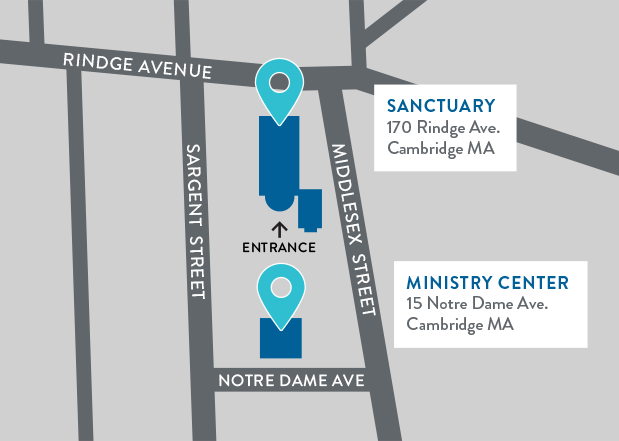
It connects to these words of Jesus which are so important, they are etched into the entrance of our church you walk under in the lobby.
Jesus said:
John 10:10-11 (Common English Bible)
10 The thief enters only to steal, kill, and destroy. I came so that they could have life—indeed, so that they could live life to the fullest.
11 “I am the good shepherd. The good shepherd lays down his life for the sheep.
The examen helps us notice that we can be robbed of life, that all kinds of things can steal our love, our peace, our joy, and our purpose.
And the examen helps us notice that we can be full of life. That with the help of the spirit of Jesus, God – our good shepherd – and sometimes with the help of friends too, we can be guided back to abundant life.
In the examen, you do four things.
- First, you remind yourself that God is with you and ask for God’s guidance.
- Then you look back on your day and notice your highs and your lows, the times you moved closer to God, closer to love, joy, peace, and abundant life.
- Then you think about what you noticed, and you talk to God about it. Maybe you say thank you. Maybe you say sorry. Maybe you ask for help, you say please.
Thank you, sorry, please.
- And then lastly, you look forward to the day to come, with hope, with resolution, and with prayer for help.
Since it’s just about the end of the year, I’m going to invite us to do this together right here, right now. So take a moment to gather a card to write on a pen.
Let’s take about 10 or 15 minutes and we’ll do this in four parts.
This was actually in our Advent guide this year, but I know a lot of us might not have gotten to spend enough time with it. So we’ll use it again, or for many – maybe most of us – for the first time.
I’ll give the instruction for each of the four parts, and then give you two or three minutes while music plays to do it.
You ready?
Here’s part one.
First, take a look back at the year behind you.
You’ve lived another year, eaten a thousand meals or so, traveled millions of miles around the son with the rest of us, whizzing through space with the rest of us at some 67,000 miles an hour. Congratulations. That is very fast, and a long way you’ve gone, without even realizing it most of the time.
Now ask yourself: what were the most satisfying parts of my year?
These might be specific experiences you’re grateful for. They might be old or new relationships you treasure. Perhaps growth or accomplishments. Even if this past year feels like it has been a series of unfortunate events, take a moment and notice what has given you life, what has kept you going amidst that. Think of three to five things if you can. What has been satisfying?
Second, with whatever came to mind, I want to encourage you to take a minute and say thank you.
Thank your mother and father God, your creator. Send a text and thank a person who’s part of this story. Maybe you can even thank the past version of you for a courageous choice you made or a new path forward you chose. Go ahead.
Thirdly, now I invite you to look back again at your life this past year, and ask yourself: what were the least satisfying parts of my year? What wore me out?
These might be specific experiences that hurt you or left you disappointed. They might be old or new relationships that have worn thin or worn out. Perhaps setbacks or failures or regrets. Even if this past year feels like it has been wonderful, take a moment and notice what has sapped you of life and left you thirsty. Think of three to five things if you can. What has left you unsatisfied?
And now instead of the usual final step of prayers for help and focus, we’re going to do something a little different. I heard someone on the radio talking about words of the year for 2024, and one of the sets of words they were talking about were different ways to say tired and fatigued.
So for our last step of this examen, we’re going to look to God for opportunities for refreshment going into the new year. OK?
Here’s how we’ll do this. Close your eyes again, if you’re willing. I’d like to imagine Jesus sitting with you. He has the voice and the vibe of a compassionate friend. Maybe he looks like a person who loves you very much. And imagine that Jesus says to you what he said to the people at the festival, so long ago.
“All who are thirsty can come to me.
If you believe in me, then drink the living waters of the spirit.
Drink, until they well up in you like a reservoir.”
As you sit with these words, and imagine them spoken to you, I wonder if you know how to find and drink this living water.
- Will it come in the voice and company of a friend?
- Is it calling to you in an old spiritual practice you’d like to renew, or a new one you’d like to try?
- In the form of art or rest or a good meal?
- What do you need to find connection and peace and direction for this new year?
I wonder how God’s spirit will call out to you to offer you renewal. If you’re not sure, I wonder who you might ask or where you could try.
Friends, if this was helpful and timely for you, I’m so glad. If it was hard to do on this day or in this space, maybe you can try by yourself or with a friend another time. In this week’s newsletter you’ll get on Wednesday, I’ll recommend trying to pray the examen regularly and I’m sharing a piece I wrote on our website, called How and Why to Pray the Examen.
Today, though, my hope is that at year end, in this Christmas season, we can remember that God is with us and that with the help of God and friends, good things are possible in the year to come.
In a very hard time in the old histories we read in the Bible, a poet said these words in a book called Lamentations.
Lamentations 3:22-24 (Common English Bible)
22 Certainly the faithful love of the Lord hasn’t ended; certainly God’s compassion isn’t through!
23 They are renewed every morning. Great is your faithfulness.
24 I think: The Lord is my portion! Therefore, I’ll wait for him.
Friends, may you today and tomorrow and the day after that and each day of 2025 that the steadfast love of God never ceases, that God’s help and goodness and mercies have no end, that they are new for you every morning. Because you are alive, and God is faithful.
Amen.