


Blog

Why We Act for Justice
July 10, 2025
During America’s great civil rights movement of the 1950s through 1970s, church-going Christians were on both sides of the great fights for justice in the United States.
In the Black freedom movement, Martin Luther King, Jr., Fred Shuttlesworth, James Baldwin, John Lewis, and thousands of other Christians pursued a more just and equal nation for Black Americans and all people, even as the majority of White Christians fought against their cause or stood aside in apathy.
In many other American justice movements of the era, the same dynamics were true. Many in the Episcopal Church, the United Church of Christ, and the newly founded Metropolitan Community Church championed gay rights in the era of the Stonewall uprising, while the majority of Christians opposed this cause. In the women’s and disability rights movements, Christians supported justice and equality, just as others sought to stand in their path.
Infamously, the same was true a generation earlier in Nazi Germany. While the ideology of the Nazi movement wasn’t Christian, the majority of its architects, leaders, sympathizers, and murderers were baptized Christians. On the other hand, many Christians were later celebrated for their part in resistance movements and in sheltering Jews and other groups targeted by the great evil of that age.
There are many reasons why Christians oppose justice or are just not interested in seeking it.
Sometimes Christians stay away from justice fights because they assume God cares only about the well-being of souls in the afterlife, and not the state of bodies in this life. They “become so heavenly minded that they are of no earthly good.” On a related note, many Christians think the good news of their faith has nothing to do with contemporary justice. When their pastors or leaders discuss justice, they can be accused of preaching politics rather than the gospel. It’s good and healthy not to promote specific political candidates or parties from the pulpit. But when churchgoers don’t want to talk about the differences their faith can make in the great causes of contemporary life, we’re not purifying our faith; we’re making it irrelevant.
Sometimes Christians don’t just stay away from justice causes; they actively oppose them. One reason is that they rigidly read parts of the Bible out of context. During the Civil War, the majority of American Christians cited the Bible to defend America’s violent enslavement of African descendants. Christians have cited other scriptures to reject the need to care for creation and pursue environmental justice as well. In each case, the Bible verses they are citing are real, but they are not reading them as Jesus and the best of the Christian tradition instructed them to – through a lens of love for God and neighbor, and what will produce the best fruit for people, communities, and the earth.
Christians have also been so attached to their own economic and other self-interests, or their patriotic national interests, that they have done harm to the people and places God loves in order to protect put themselves or their group first. Movements to make one’s country great again, at others’ expense, are not new.
At Reservoir Church, these reasons to stay away from justice work are not compelling to us. They are sober warnings to people of faith that in the name of our God or religion, it is easy to become hard-hearted and unloving and to end up on the wrong side of history.
Participation in God’s longing for a more just world is an important part of Reservoir’s DNA. It shows up in our vision, in which we long for many people in Greater Boston and beyond to connect deeply with Jesus and our church and to absolutely thrive as a result. It shows up in our core values, one of which is action – to seek justice, show compassion, work for reconciliation, and hope for transformation in joyful engagement with the world. And it shows up in our worship. Our preachers talk about all kinds of ways that the ancient stories of our faith intersect with modern life, including God’s inspiration for us to work for justice. And our recent annual Pride and Juneteenth services, led by members of our LGBTQ+ and Black communities, respectively, include stirring calls for justice as well.
We understand that there are many reasons for churches and followers of Jesus to joyfully work for justice in our communities and world at large. Here are just four of them.
- It’s what God commands. The oft-cited and beautiful ancient prophecy in the Bible’s book of Micah states: God has told you, human ones, what is good and what the Lord requires from you: to do justice, embrace faithful love, and walk humbly with your God. This verse isn’t the only one, either. Throughout the Bible’s prophetic tradition, people insist that God loves religion that seeks the good of society’s most vulnerable, just as God hates religion that is not aligned with activity for a more just world.
- It’s in our prayers. The model prayer, which Jesus teaches, a kind of architecture for the ways Jesus’ followers are instructed to talk with God, tells us to pray that God’s kingdom will come and God’s will be done on earth as it is in heaven. The comment about God’s will is a key to what this language of the kingdom entails. Jesus does not reign through any of the many empires whose presidents and monarchs have claimed to be on God’s side. God’s ways are honored when the good and just, and loving desires of God come to pass in our world. This is what Jesus teaches his disciples, then and now, to pray for, yearn for, and live for.
- Justice is WHO we are and what we always have been about at our best. While Christians have too often been on the wrong side of history – polluting the earth, enslaving and colonizing, neglecting or even terrorizing vulnerable minorities among us, at our best, we’ve been on the side of justice. First through third century followers of Jesus, persecuted by the Roman Empire, were famous for their community’s love and protection for widows, orphans, and other humans whose well-being was despised and rejected by Roman elites. Eighteenth and nineteenth-century British and American Christians were leading moral visionaries and activists in the abolition movement. In contemporary American and global life, followers of Jesus are at the forefront of the movement for the mattering of Black Lives and the elimination of sex trafficking. At our best, justice is simply what we do. It is who we are.
- And justice is in our common self-interest as well. Because Jesus’ vision of the Kingdom of God can be misunderstood as patriarchal or tyrannical, contemporary Christians have translated his words with other phrases. The late Methodist theologian John Cobb called it the “commonwealth of God,” emphasizing Jesus’ vision for the collective well-being of all. The Cuban feminist theologian Ada Maria Asasi Diaz called it the “kingdom of God,” emphasizing Jesus’ vision for right relationships among the whole human family. And the great civil rights leaders like Rev. Dr. Martin Luther King, Jr. and John Lewis imagined it in public life as “Beloved Community,” a society in which our friend Drew Hart likes to say, “everyone belongs, everyone matters, and everyone can thrive.” Jesus taught us to pursue such a world together and warned us that God will judge us on whether or not we live with the just love and action that helps it be so.
While love and action for justice show up throughout our church life, two recent ways we’ve embodied these concerns are in our annual Soccer Nights program and in our leadership of a campaign called Prayers for Liberty.

For a lot of kids and families, equipment and membership in soccer clubs are prohibitive. All around the country, lower-income students and students of color get pushed out of sports, including soccer. In general, enrichment opportunities are limited to privileged kids, while lower-income kids miss out. For nearly 20 years, we’ve run a free, week-long evening soccer camp that promotes athletic skill, leadership development, and citywide unity. Each summer for one week, around 250 kids, their families, and 70-100 volunteers gather for a neighborhood party where dozens of languages and nations of origin are represented. Our camp has been replicated in 10-15 other communities in Greater Boston and beyond. While church and community volunteers work really hard on this program, it’s also incredibly fun. Soccer Nights lead volunteers have often been known to call the week of the program the best week of the year.
We’ve looked to surround Soccer Nights with other ways to express love and pursue justice in our neighborhood as well. For nearly a decade now, Reservoir has spent $10,000 every year on a scholarship program for alumni of Soccer Nights, each year helping ten first-generation college students from our neighborhood pursue their dreams through higher education. It’s one of many ways Reservoir uses our time and our collective resources to pursue a more generous and just world.
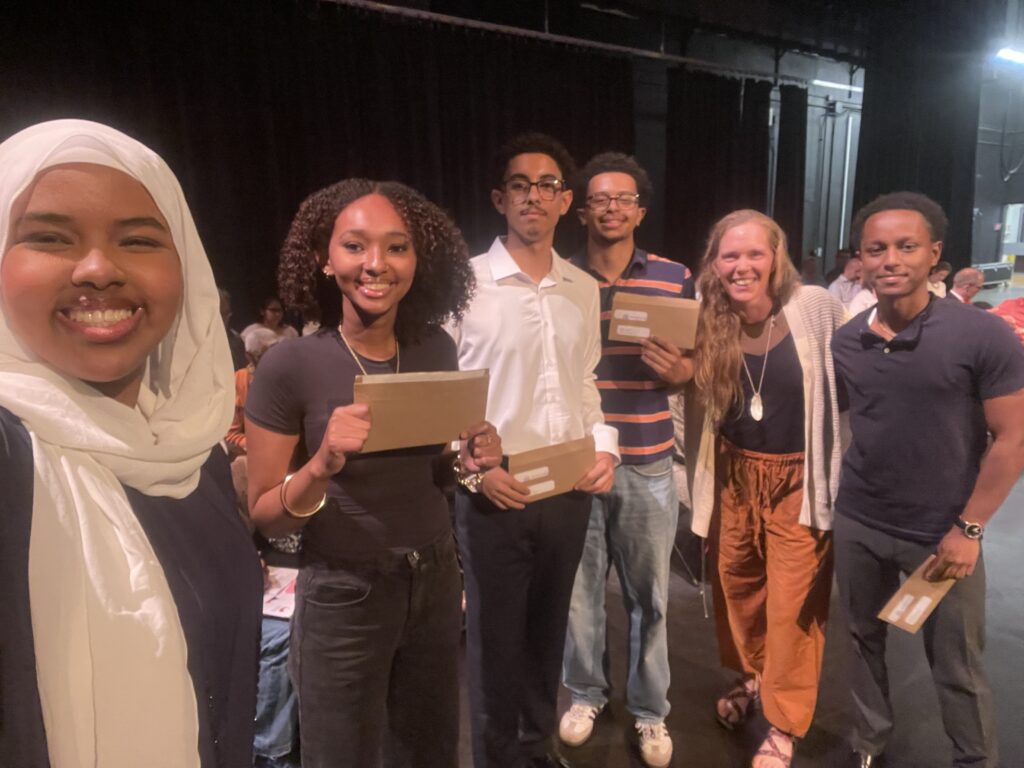
Recently, Reservoir has also been involved in an interfaith campaign to help local faith communities stand up for our shared sacred values and our country’s best democratic principles. In response to the grave attacks of the current presidential administration on due process, the rule of law, and many other basic, constitutional, human rights, our senior pastor, Steve Watson, and hundreds of other faith leaders in Massachusetts have written to and met with members of our Congressional delegation. We have marched from Lexington, the birthplace of American liberty, through our city of Cambridge to the state capital of Boston. And we are planning dozens of public prayer and witness events on August 3, 2025, to mobilize people of faith to stand up and pray for a more decent and humane America, in which all of God’s children have their rights and lives protected.
Reservoir Church has been proud to be part of many campaigns for love and justice, from statewide work on access to quality, affordable housing to our own congregation’s work to be a liberative, safe community for all people, LGBTQ people included.
This work is energizing for our community. And we believe it is an expression of our faith in a just, loving God as well!